THE HELIPAD GAZEBO
NEAR EL YUNQUE NATIONAL FOREST, PUERTO RICO
PROJECT STATUS | BUILT
PROJECT BACKGROUND
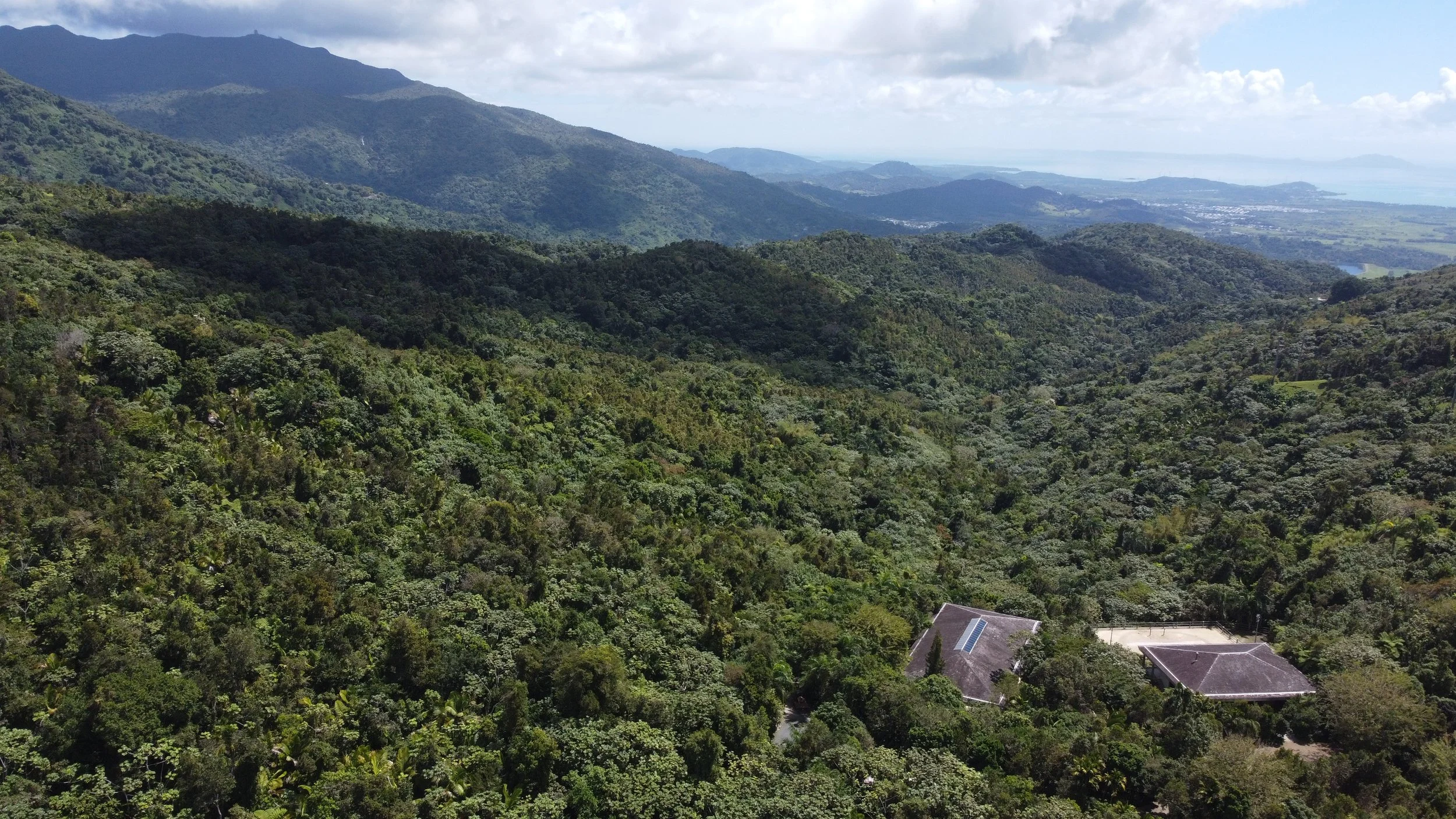
This design-build intervention was carried out directly on site, guided only by hand sketches during construction. It forms part of a series of projects implemented during 2011-2016 within a 500-acre private parcel on the southwest edge of El Yunque National Forest, Puerto Rico.

THE PROJECT SITE
At the southeast edge of the property, along the road to the helipad, a small gazebo perched on a grassy mound offered riders a moment of pause during long journeys through the forest trails. The owners wished for something special that would enrich this resting place without altering its character. We looked to the square concrete slab of the gazebo itself as inspiration, using its form as the seed for transformation.

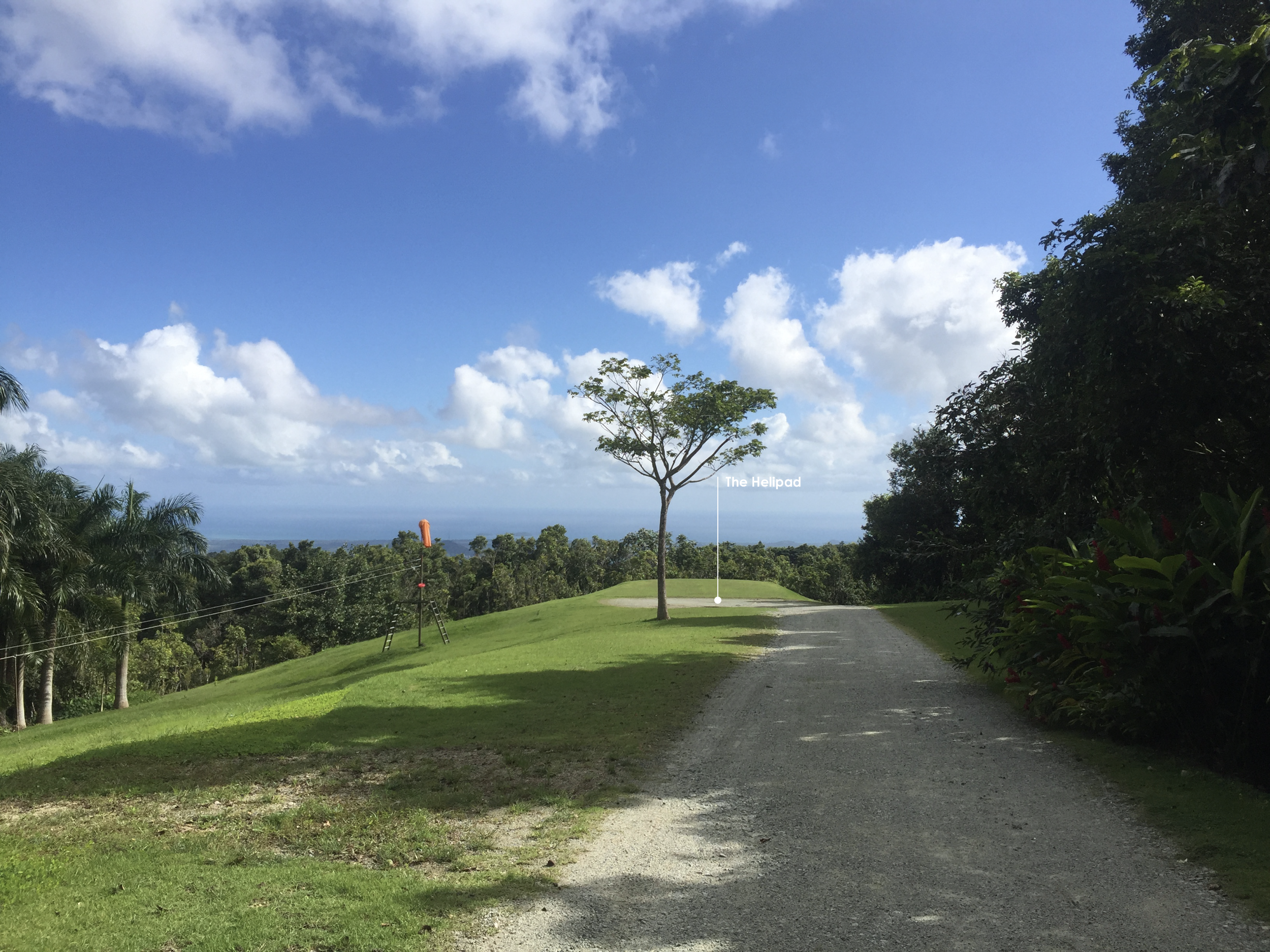


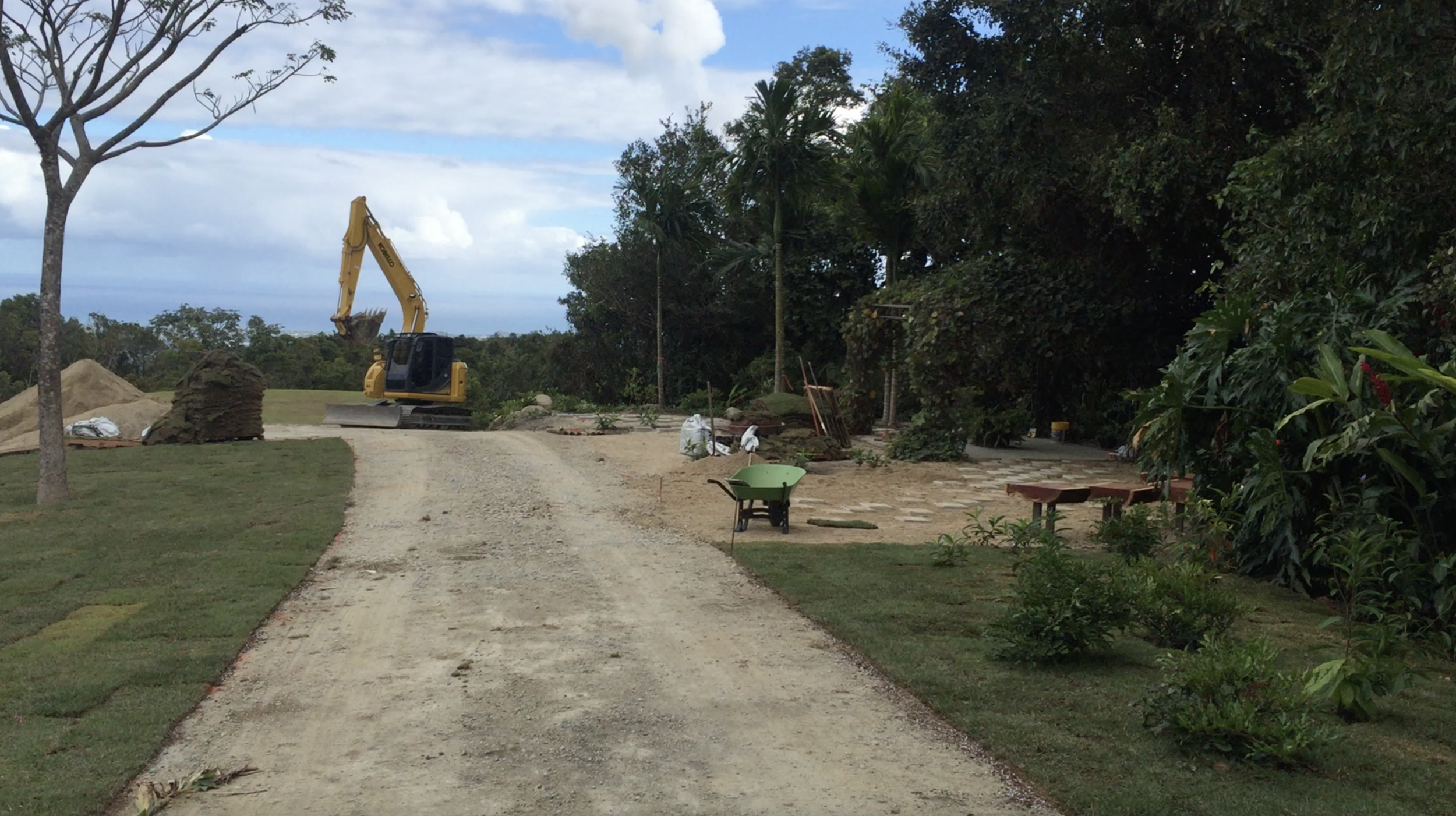
From the gazebo, the wide circle of the helipad disrupted the view of the ocean and islands beyond. To restore the outlook, we raised the grade of the sloping lawn, creating a planted terrace that concealed the helipad in the middle ground. Boulders were carefully placed to hold the new soil, later softened and hidden by vegetation, so that the gaze could move uninterrupted toward the horizon.
THE AUSUBO BENCH
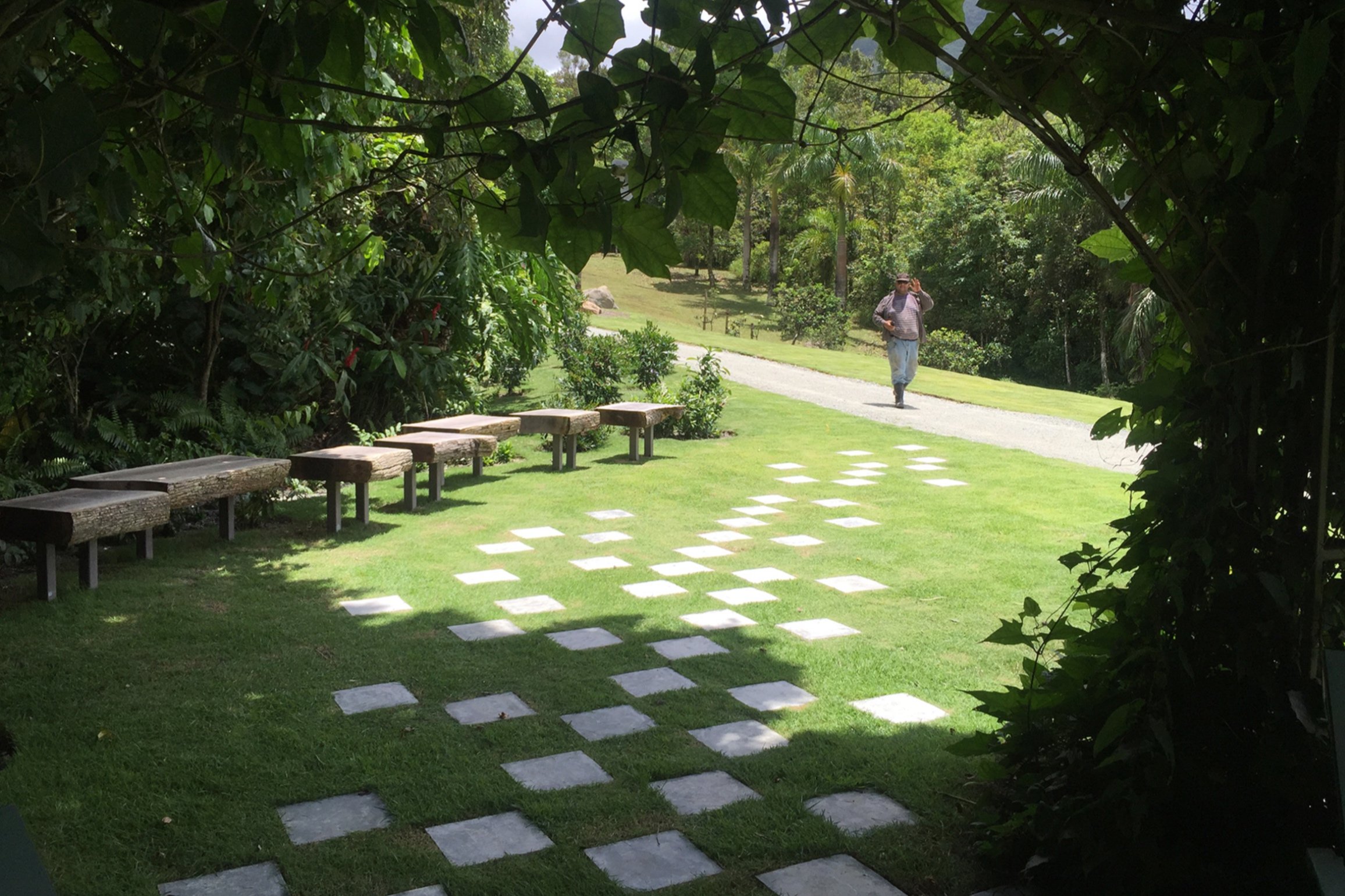
Beside the gazebo, the owners asked us to transform an old ausubo log into a place to sit and gather. We proposed a cluster of log segments—some double-sized for shared seating, others smaller for individuals—linked together by a necklace-like metal line. By cutting the log into curved sections, the bench gained a flowing, organic rhythm, inviting people to sit from many sides and encouraging interaction. The owners’ construction crew, working from our drawings, brought the design to life.


The metal supports were designed to disappear beneath low ferns growing under the benches, so the pieces would appear to float lightly above the vegetation.
PLAYING WITH SQUARE SHAPES
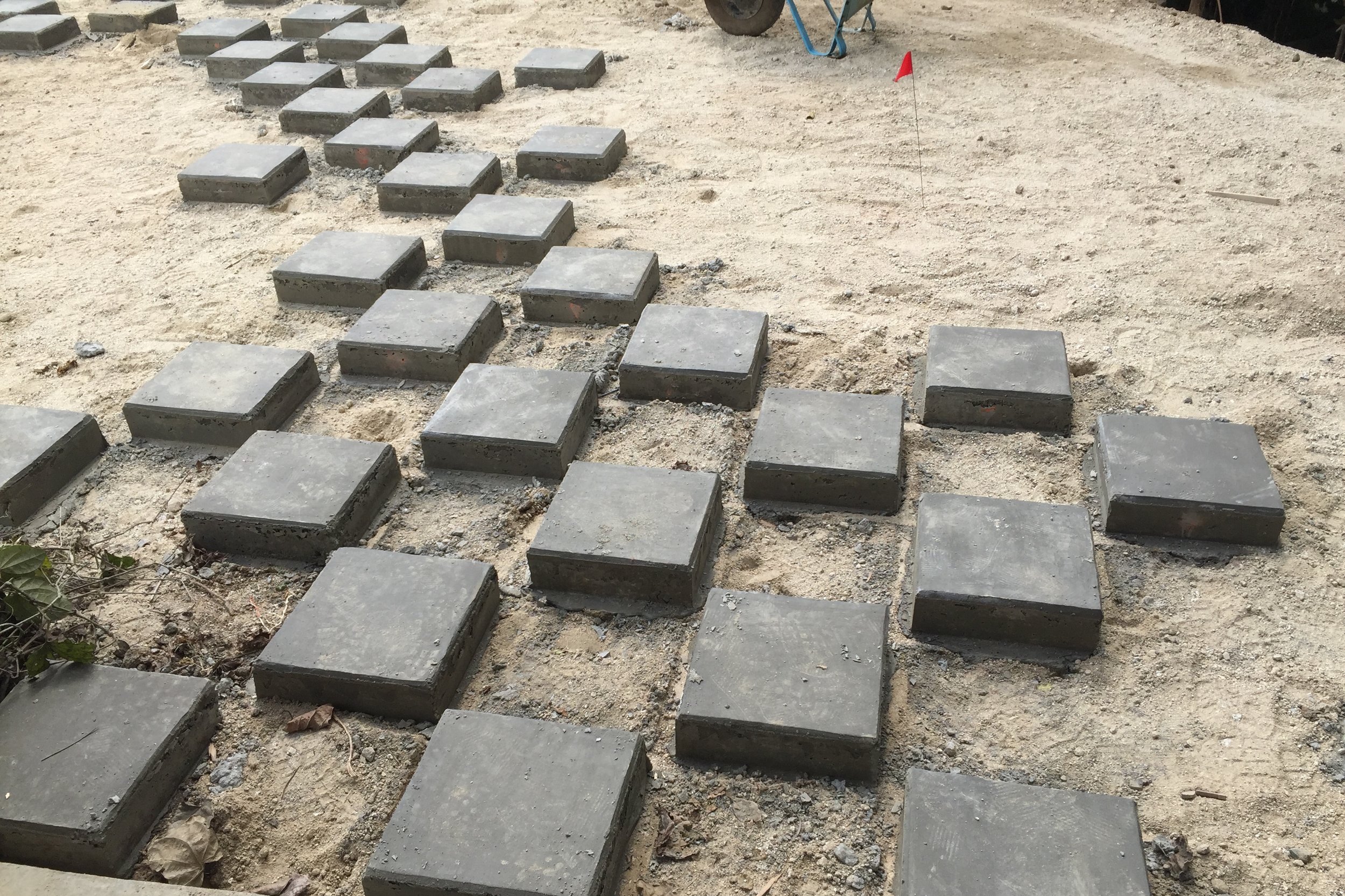
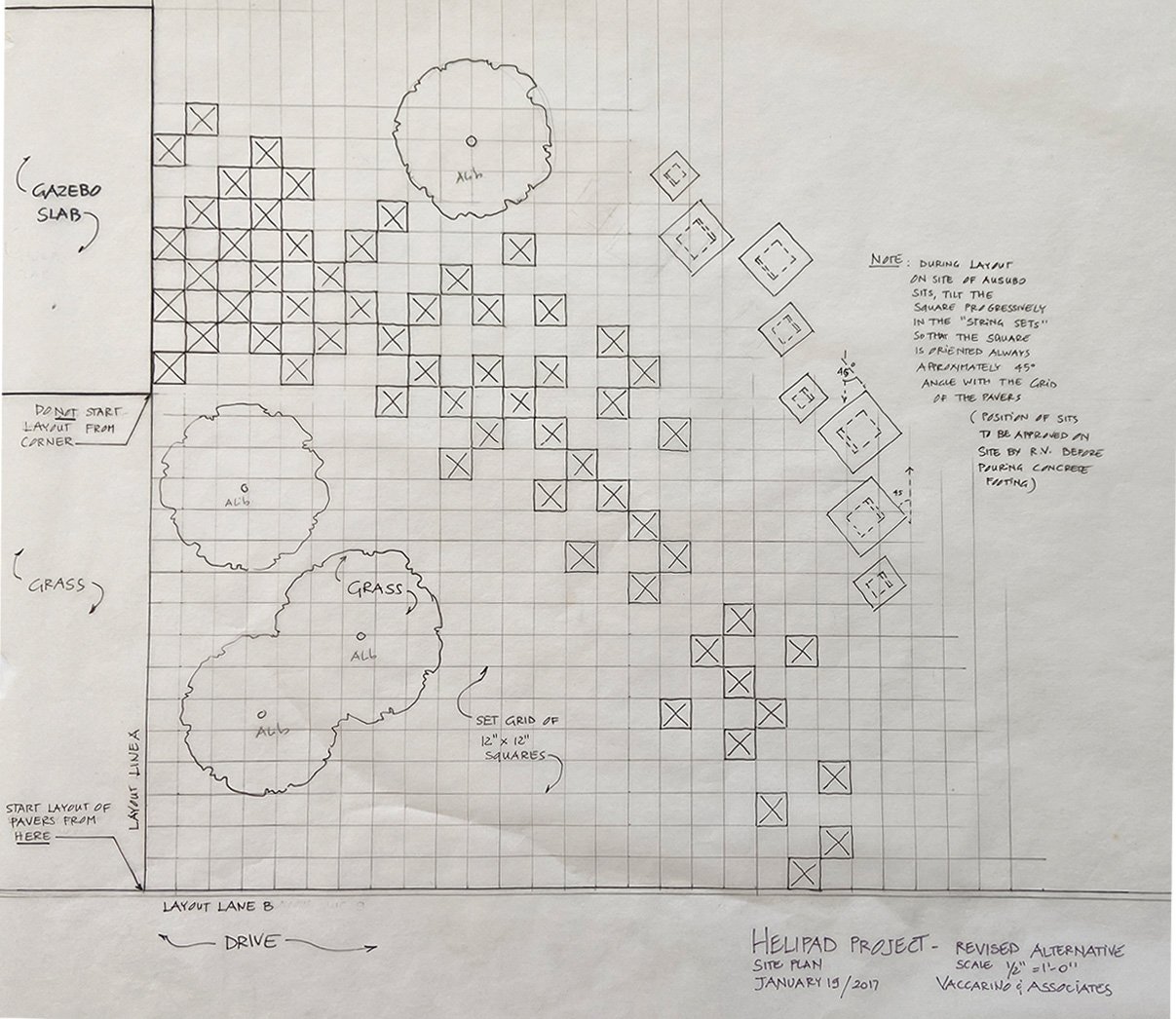
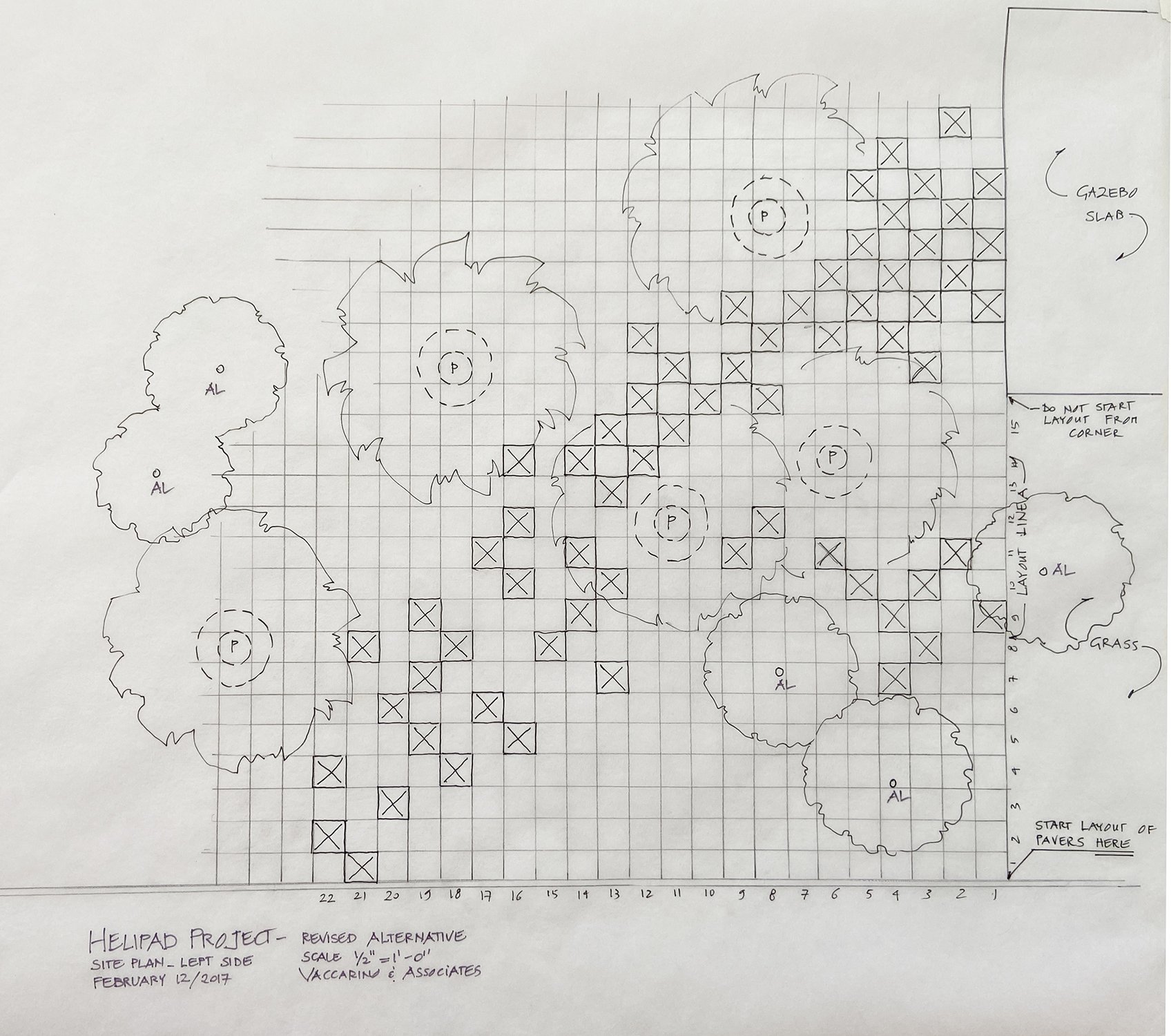
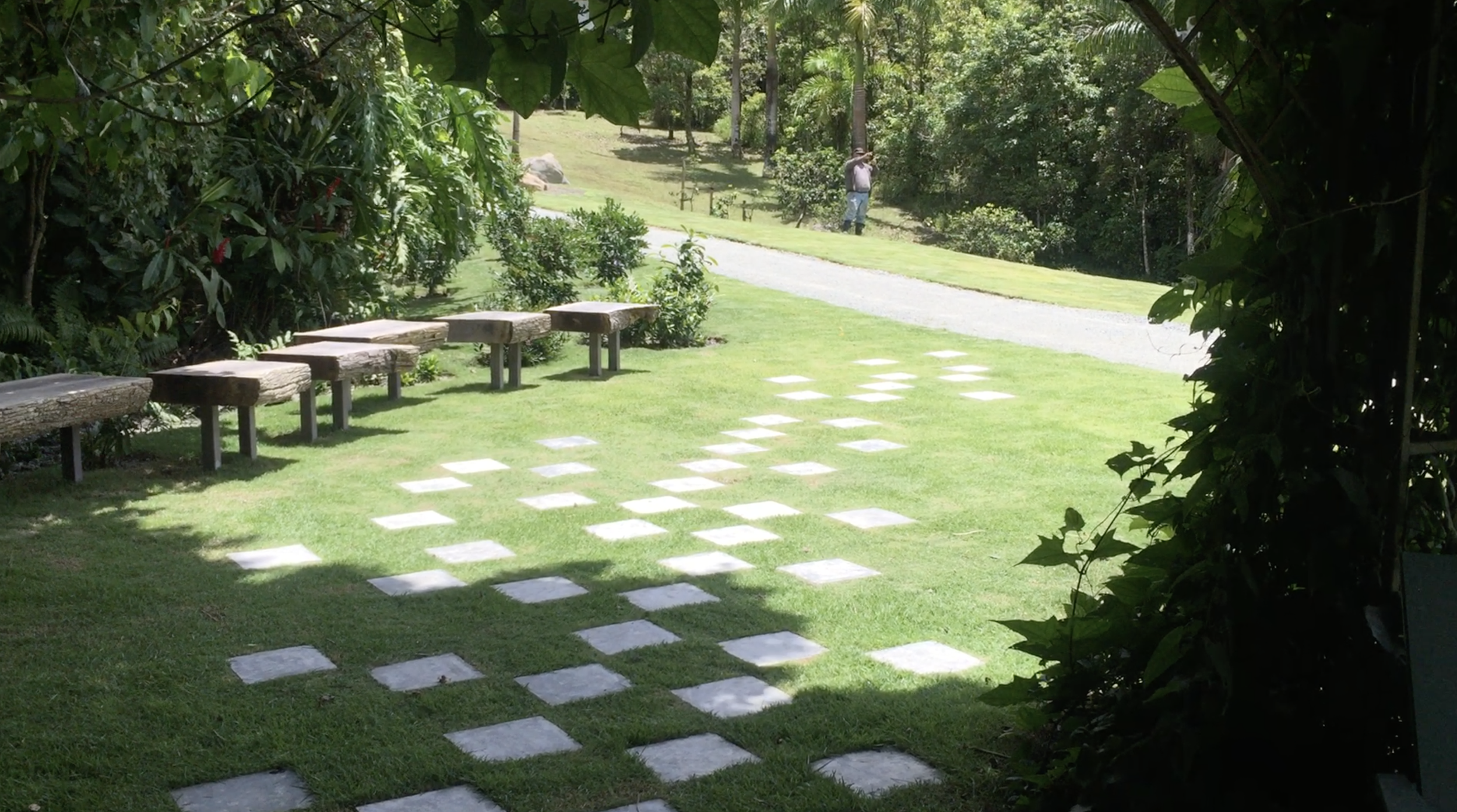
Custom checkerboard pavers were laid on both sides of the gazebo, echoing the offset rhythm of the ausubo bench pieces. For children, they became a playful game; for adults, a subtle cue guiding movement toward the gazebo and into the hidden forest playground beyond, without the formality of a defined path.



From the gazebo, the distant ocean and Naguabo come into focus, while the elevated grass terrace conceals the helipad in the middle ground and extends the usable space. This gesture recalls the classic garden device of the ha-ha, where a hidden boundary preserves uninterrupted views.
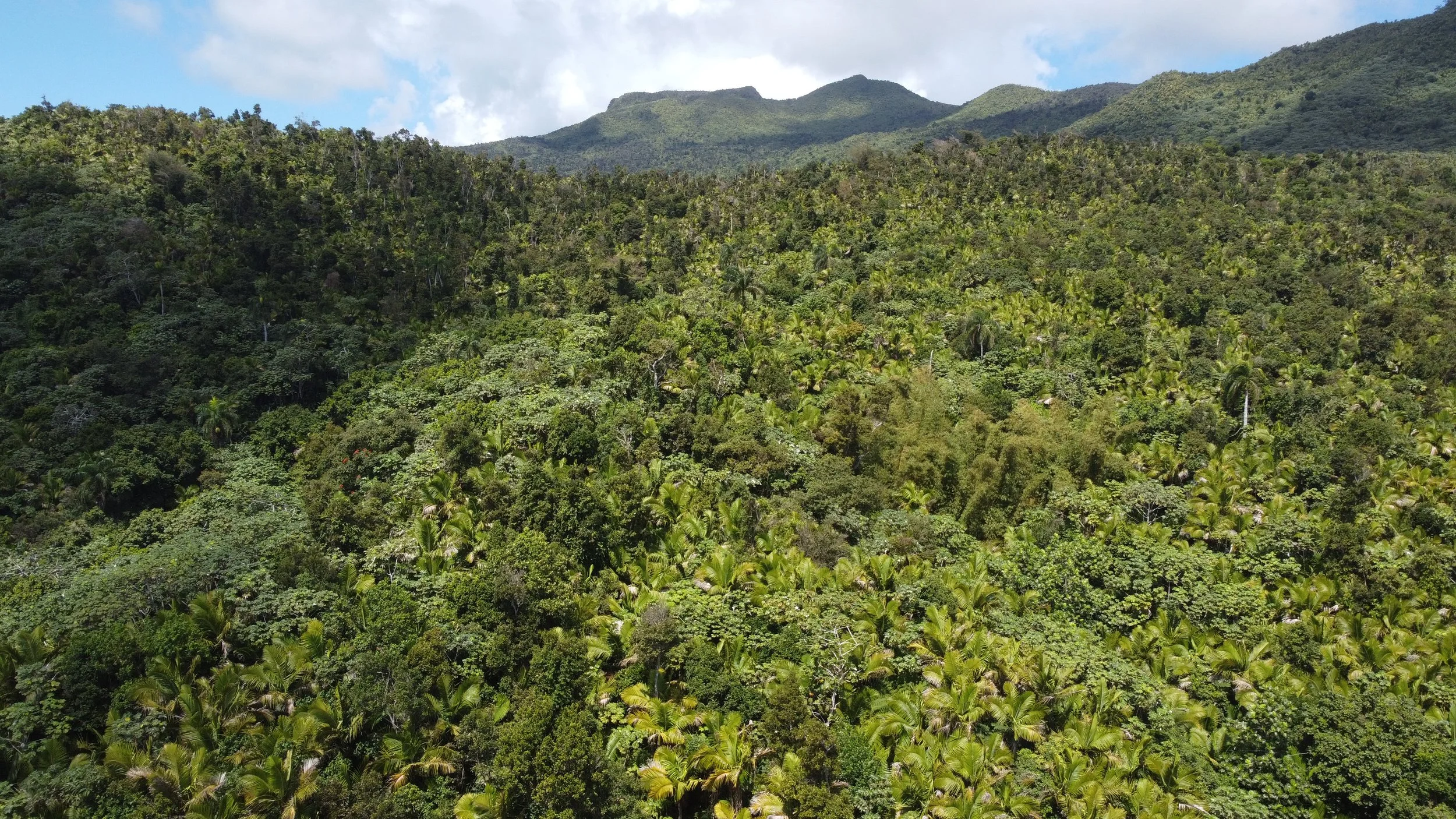
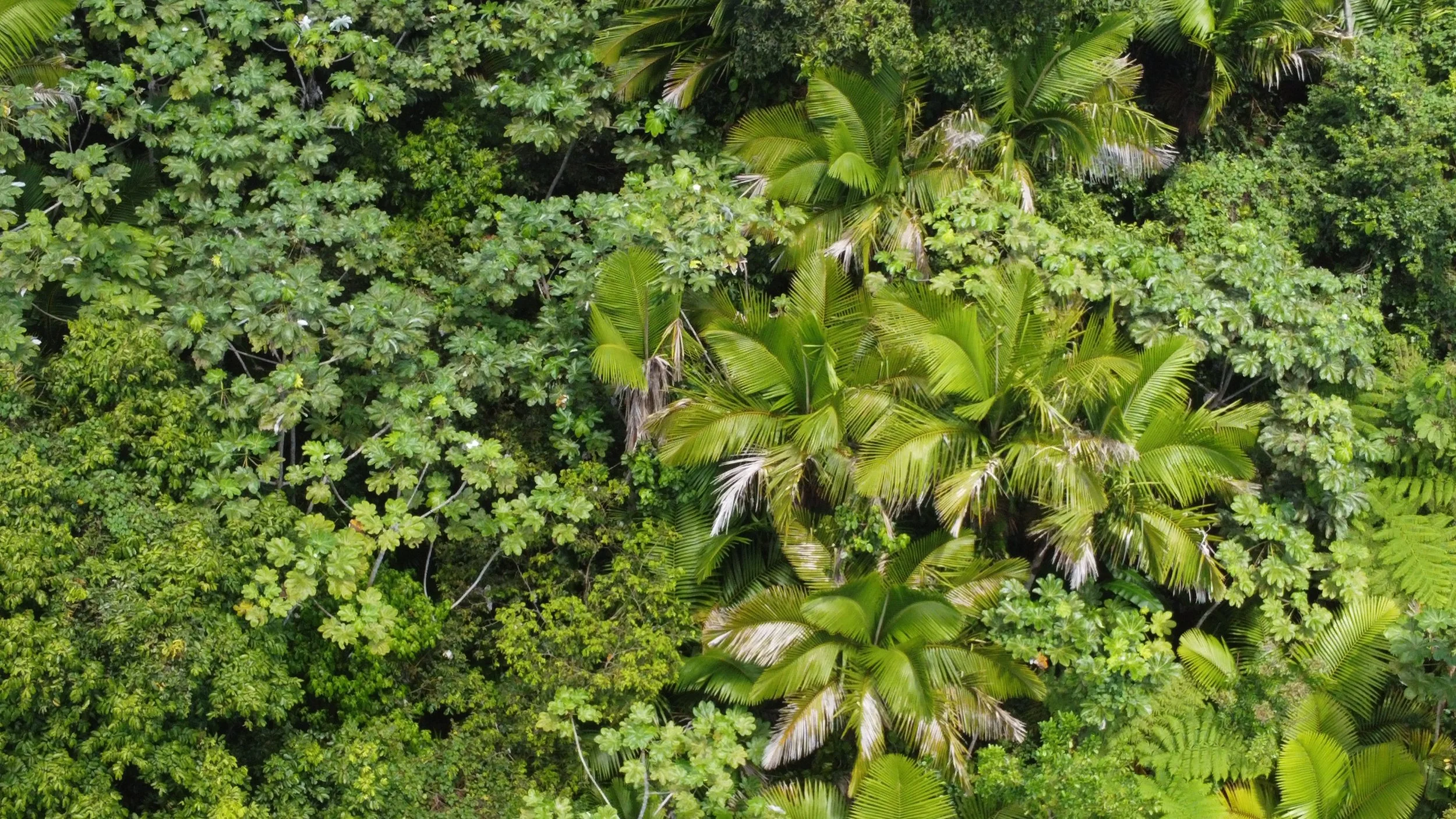
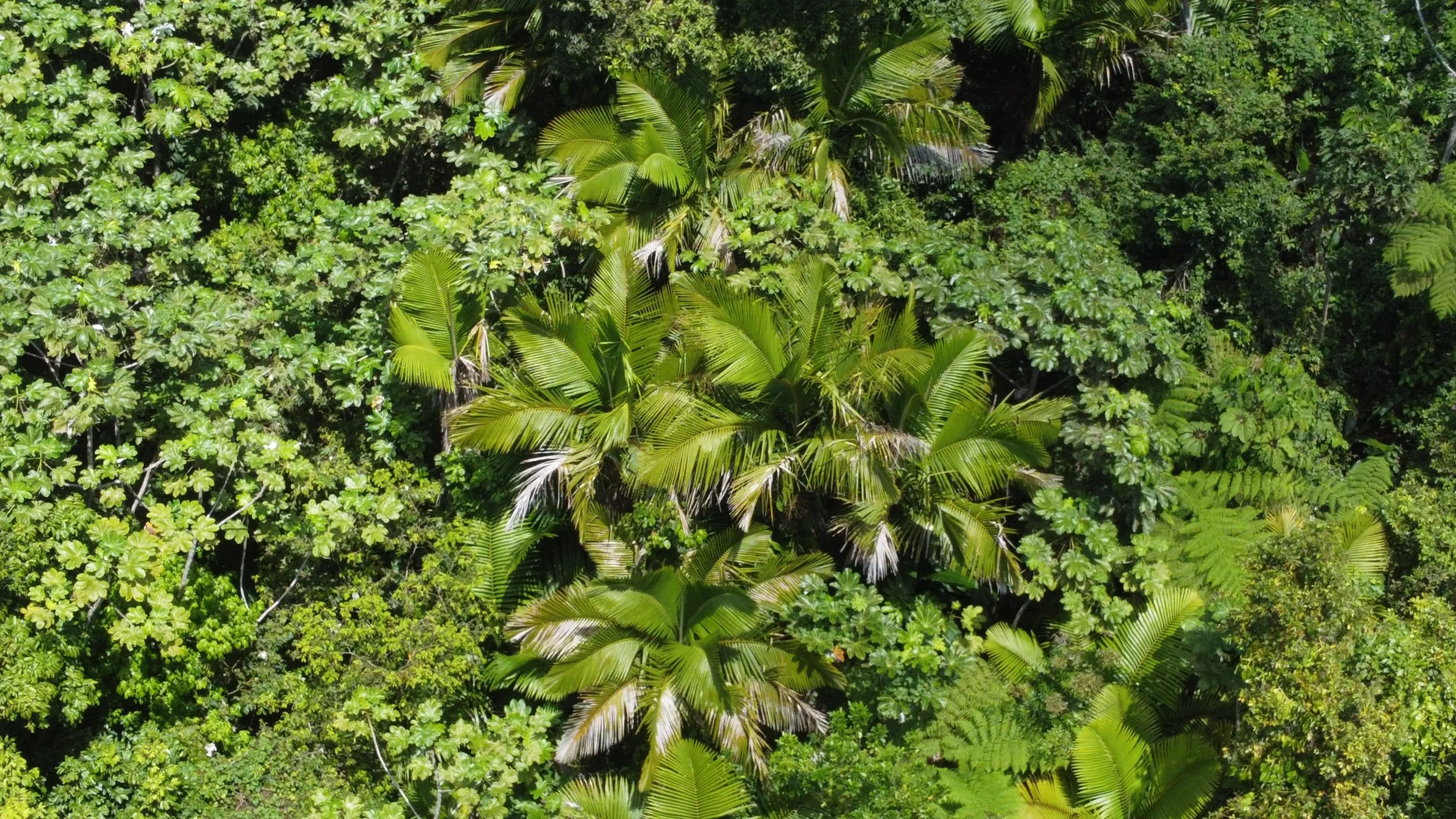
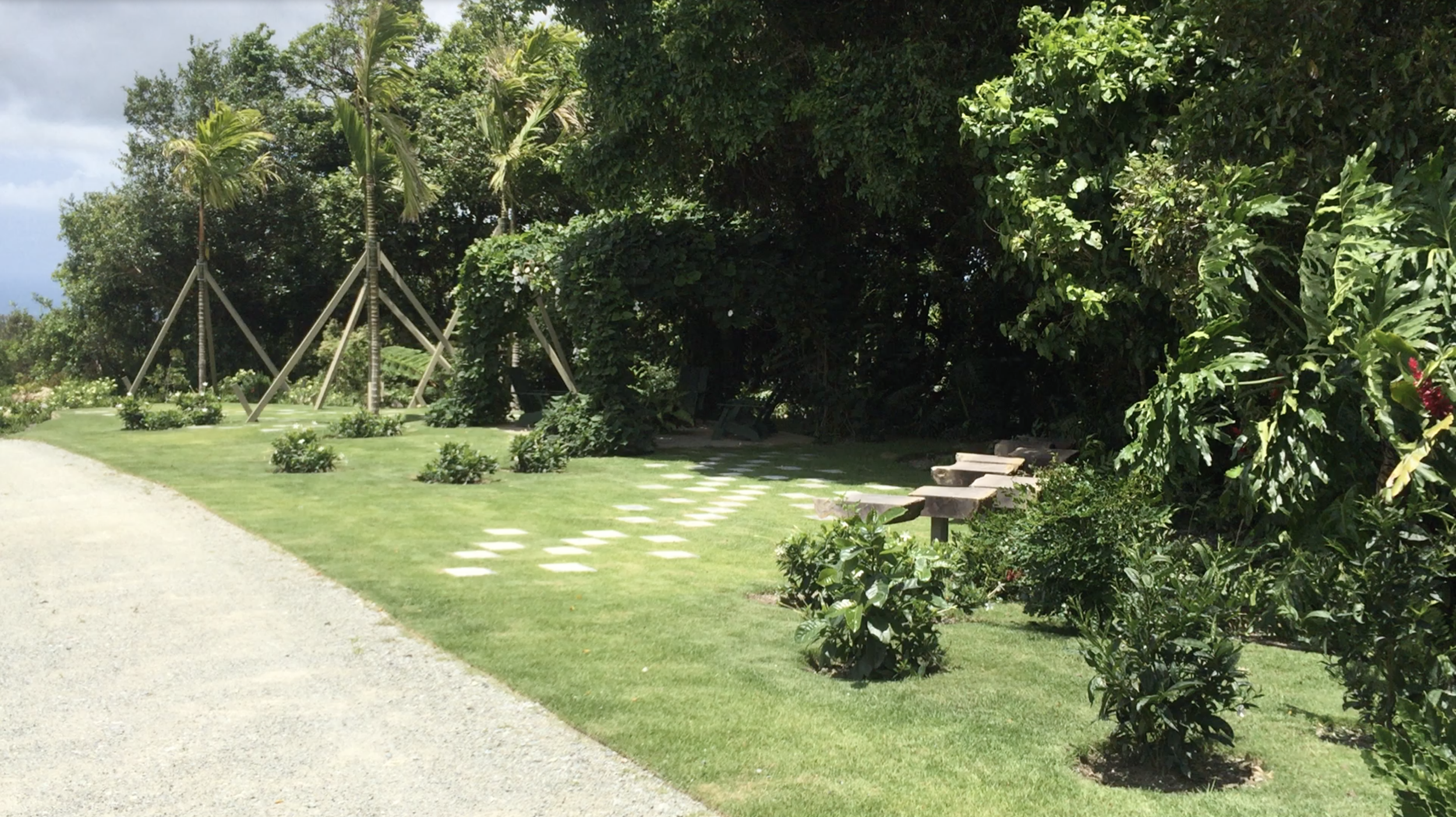
The gazebo recedes into the forest backdrop, while the new plantings draw the eye. Shrubs and ferns conceal the grade change between the terrace and the helipad road, allowing the landscape to read as a continuous, seamless garden.
AFTERWARDS
Part of the broader Rainforest Interventions, this work transformed disturbed clearings and road ends into spaces of renewal and encounter. The Helipad Gazebo and the Ausubo Bench emerged from simple forms and on-site improvisation, becoming places for pause, gathering, and play within the forest. When Hurricane María struck, their surrounding landscapes revealed their strength: trees were lifted, staked, and survived, while broken ones created shelter for new seedlings. These responses confirmed the resilience of dense, layered planting strategies and reinforced the project’s role as a case study in tropical forest regeneration—living systems able to adapt, endure, and evolve with time and disturbance.