
OLD SAN JUAN WATERFRONT PARK
OLD SAN JUAN, PUERTO RICO
PROJECT STATUS | UNBUILT
PROJECT BACKGROUND
Vaccarino Associates collaborated with Toro Arquitectos to develop design concepts for a park and mixed-use proposal in Old San Juan. Located at a critical point where Avenida de la Constitución loses its ceremonial character and slips into neglect, the project was envisioned as the “first bead” in a sequence of urban interventions that could gradually requalify the district. The concept introduced a new vision for land use, alternative transportation, and green infrastructure, while transforming derelict areas, interior courtyards, and parking lots into vibrant public spaces.


EXISTING CONDITIONS
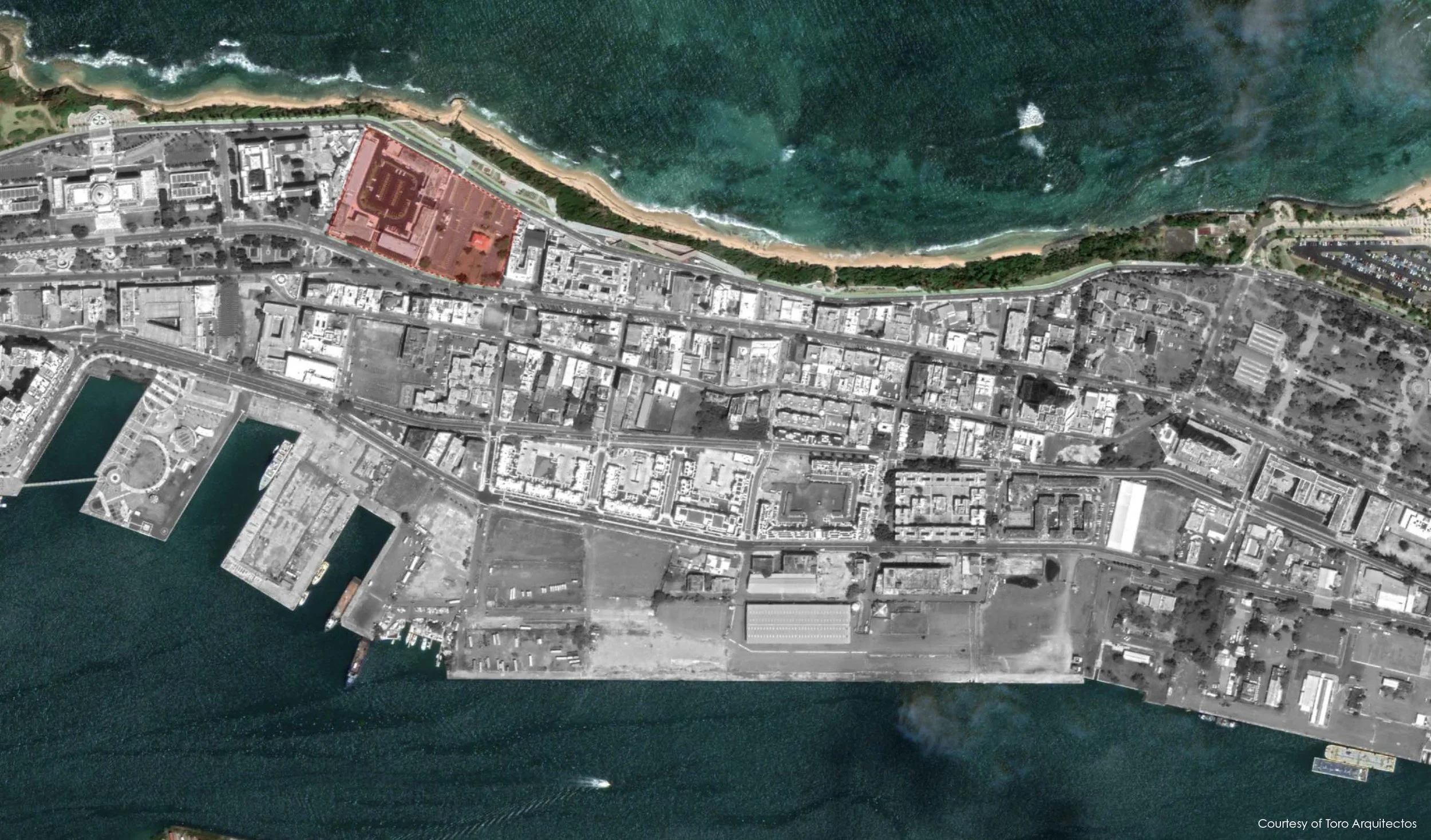
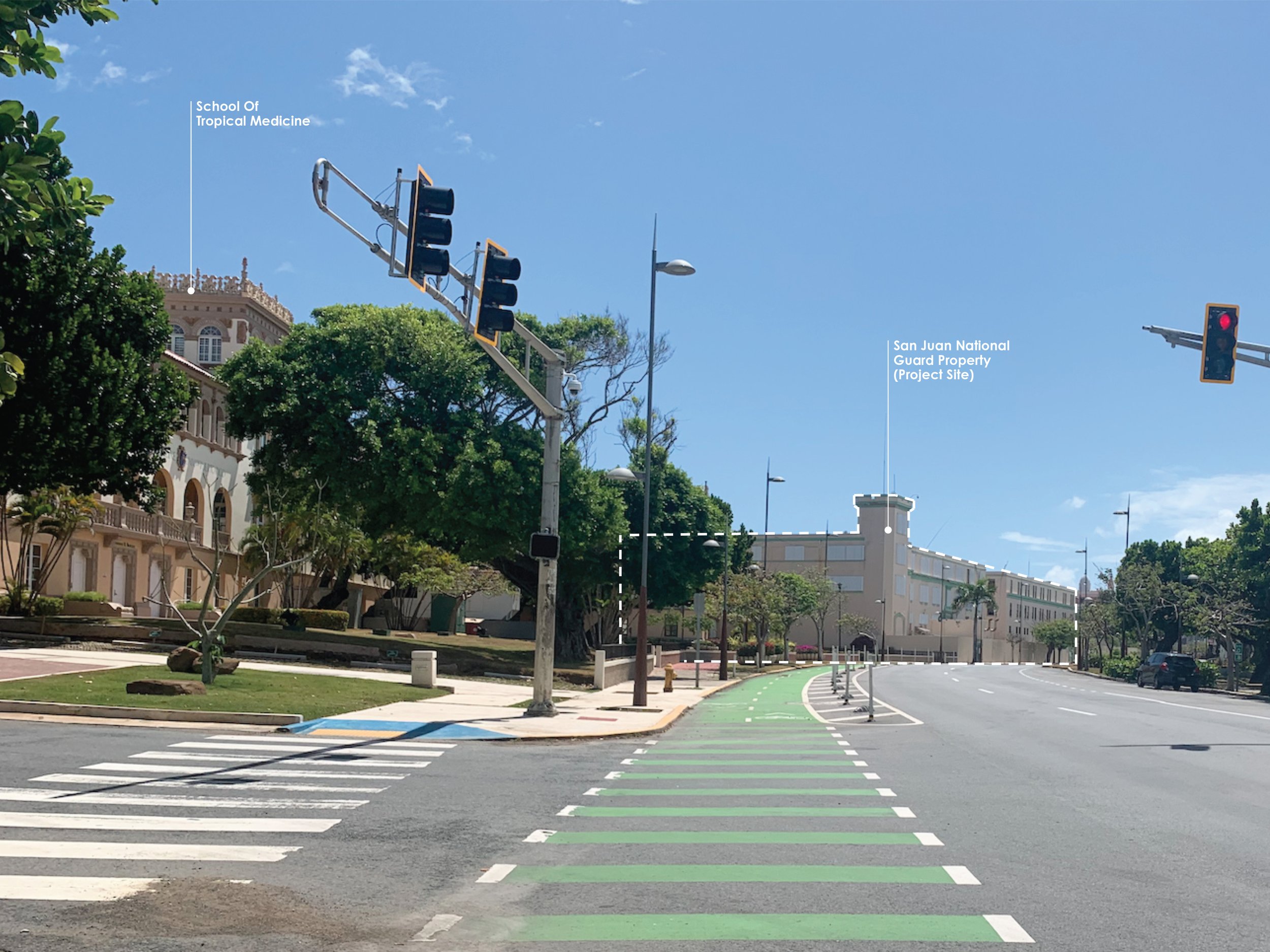
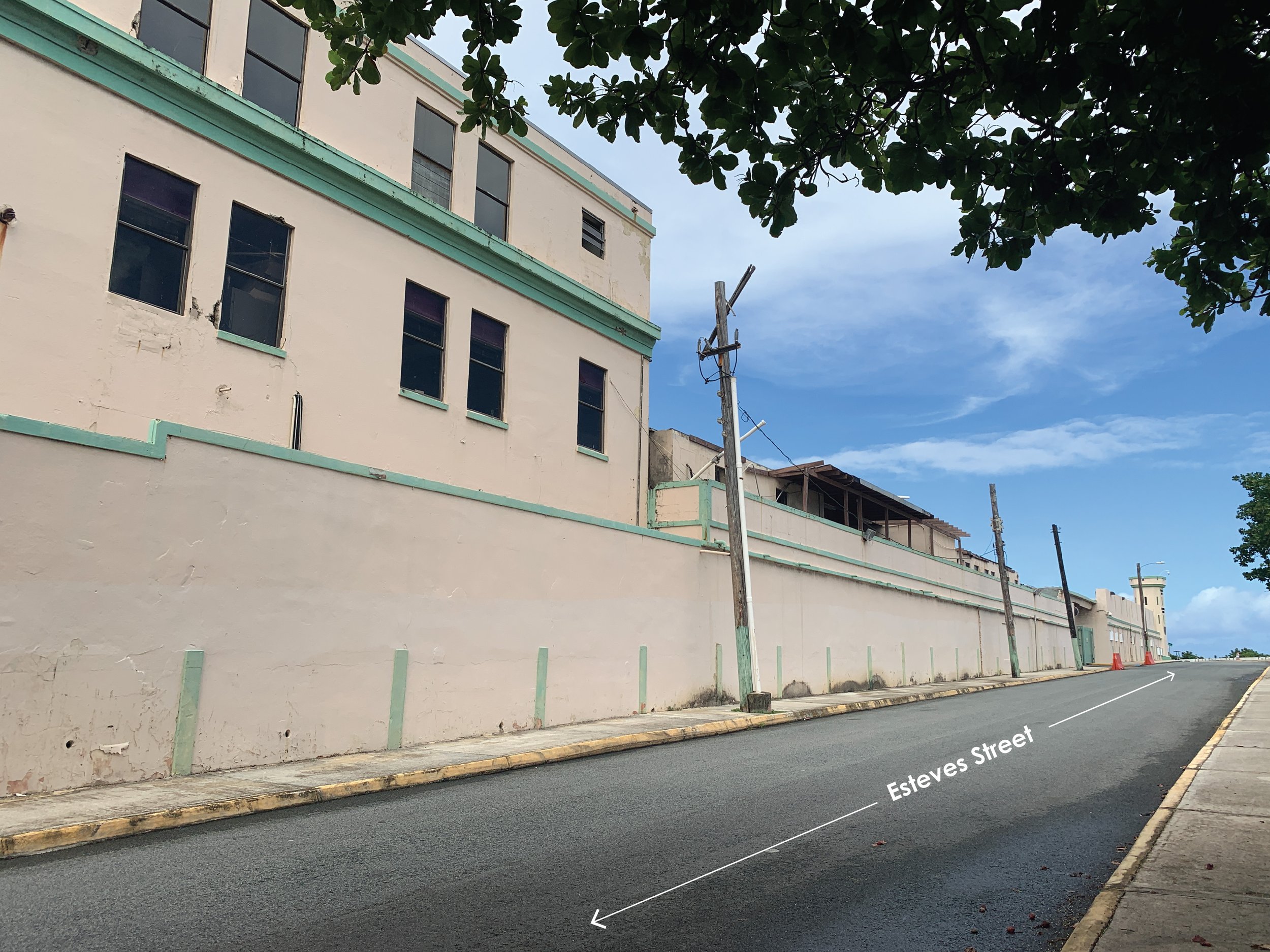
The site, owned by the U.S. Commonwealth of Puerto Rico, currently houses the Puerto Rico National Guard Museum and the San Juan National Guard Career Center. The compound of large square buildings is in severe disrepair, and its central courtyard has been reduced to vacant parking lots.






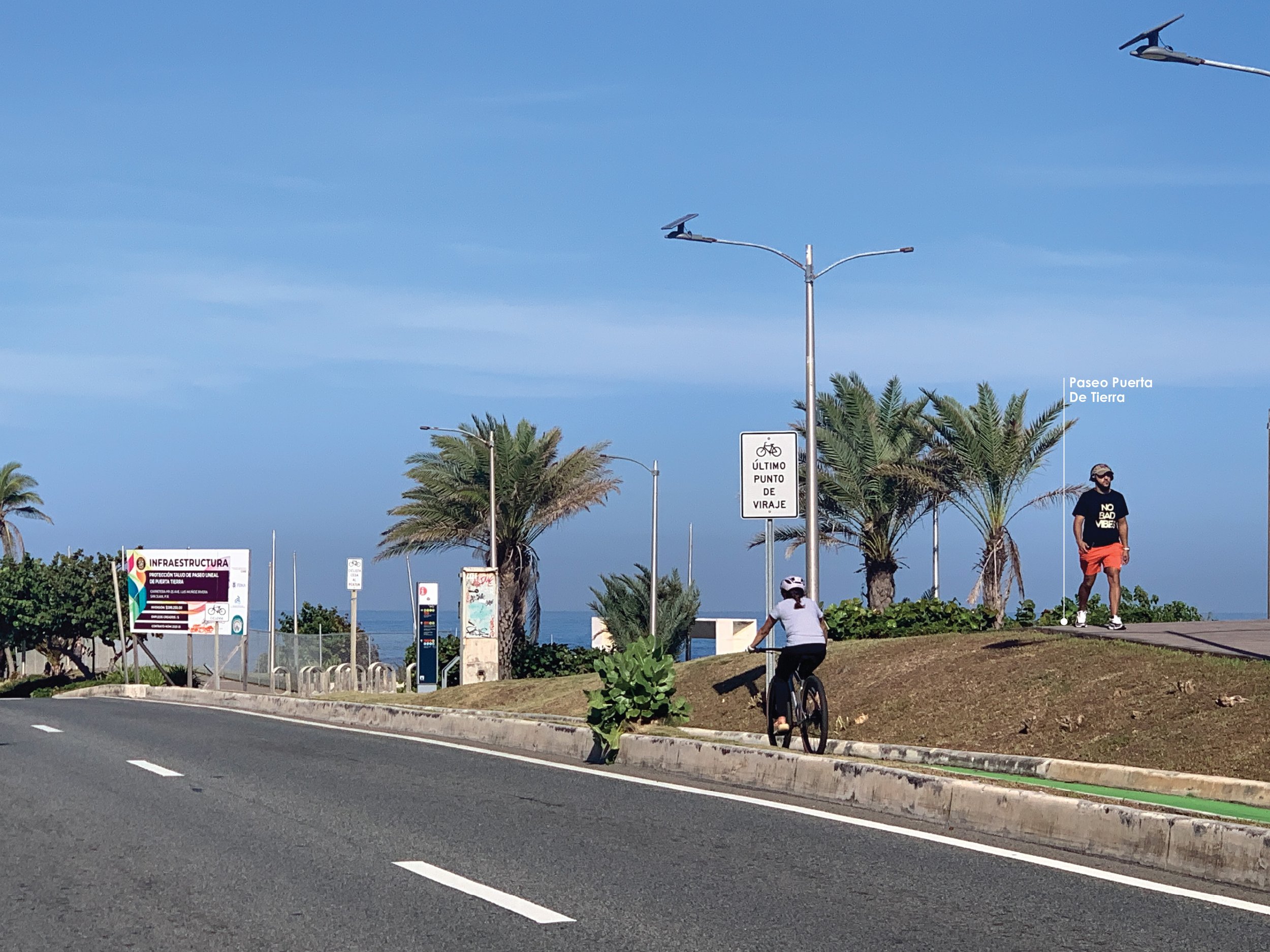


SITE CONTEXT


EXISTING CONDITION DIAGRAMS
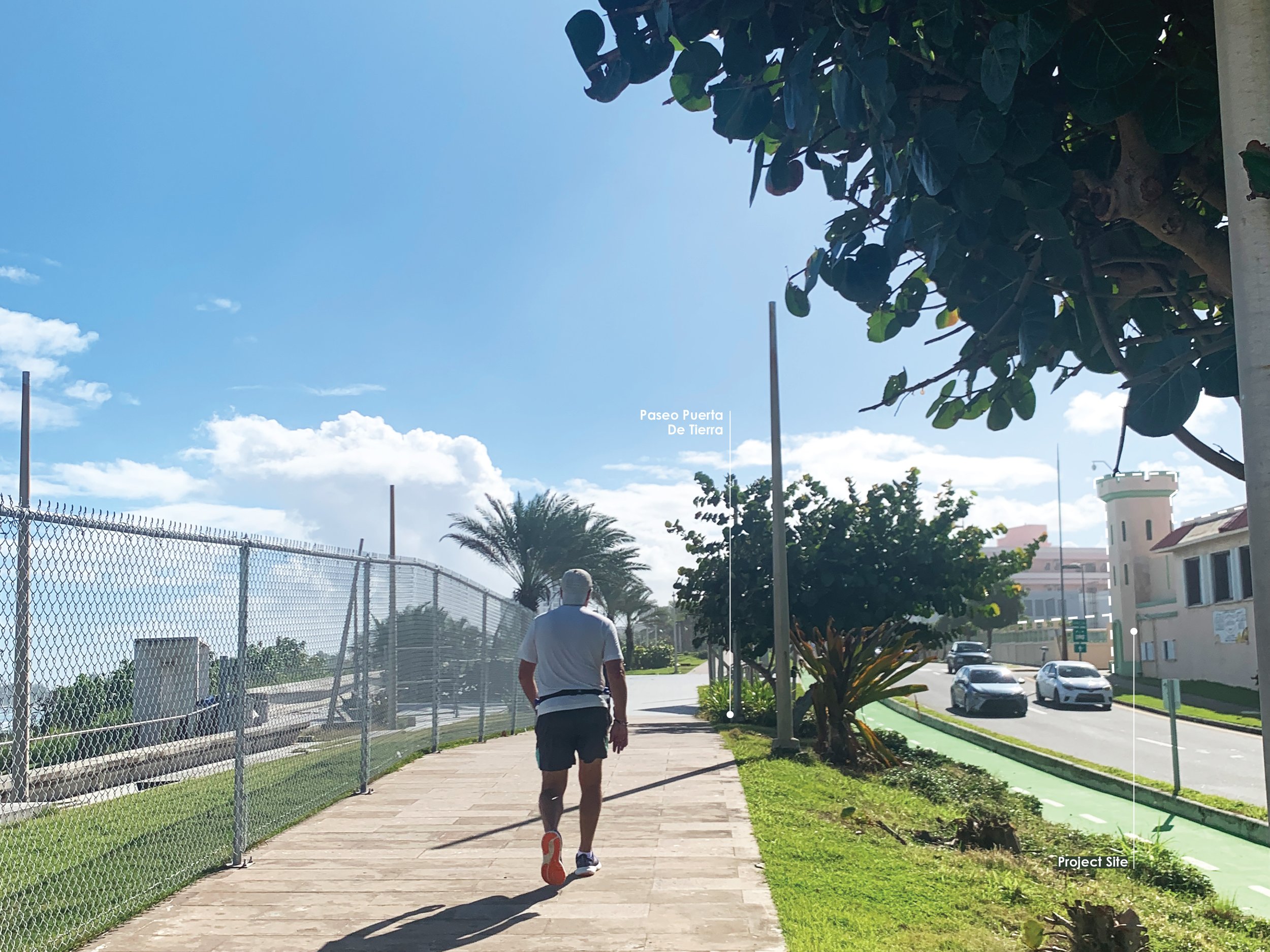
The area is defined by nearby green spaces, multiple bus stops, and an abundance of parking, complemented by paved public zones and the Paseo Puerta de Tierra that shape accessibility. Surrounding land uses combine governmental, institutional, residential, and commercial buildings interspersed with abandoned structures. Key urban axes—the Capitol, the School of Tropical Medicine, and Avenida de la Constitución—provide strong reference points for reconnecting the site to Old San Juan’s urban fabric.


OPPORTUNITIES
The site offers room for future expansion and direct connections to surrounding green public spaces. Its elevated position provides ocean views and breezes, while the large open area creates flexibility for multiple programs. With nearly 30,000 m² available, the site has the potential to anchor new public amenities and serve as a catalyst for reconnecting Old San Juan’s waterfront with its urban fabric.


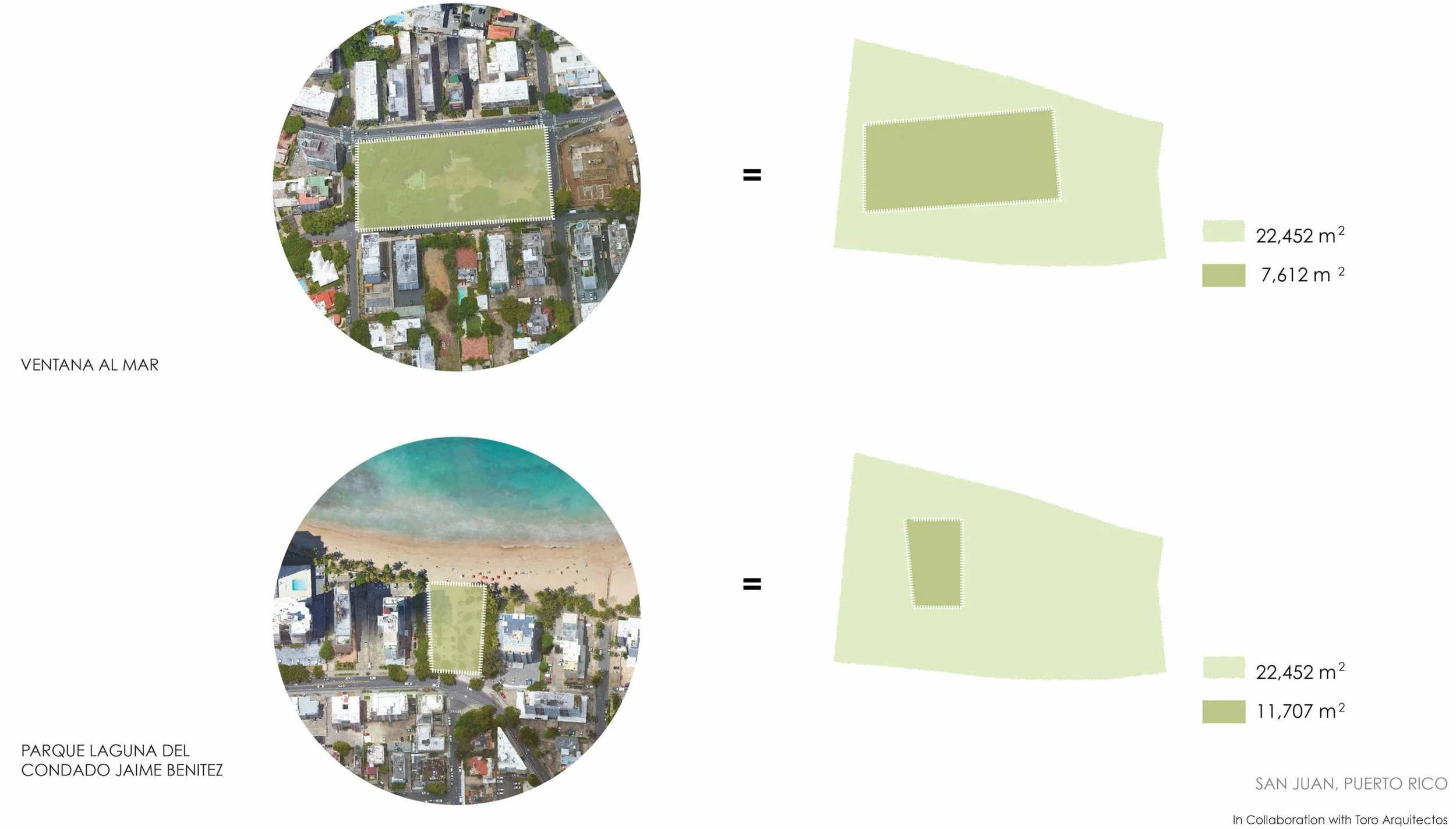
PRECEDENTS STUDY:
Measured against San Juan’s notable public spaces, the project site emerges as a strategic opportunity. With 22,452 m², it exceeds the size of Plaza Antonia Quiñones and Parque del Indio together, and approaches the scale of the great open lawns at Castillo San Felipe del Morro. This comparison positions the site to become a new landmark landscape, extending the city’s tradition of civic gathering places.



DESIGN CONCEPT
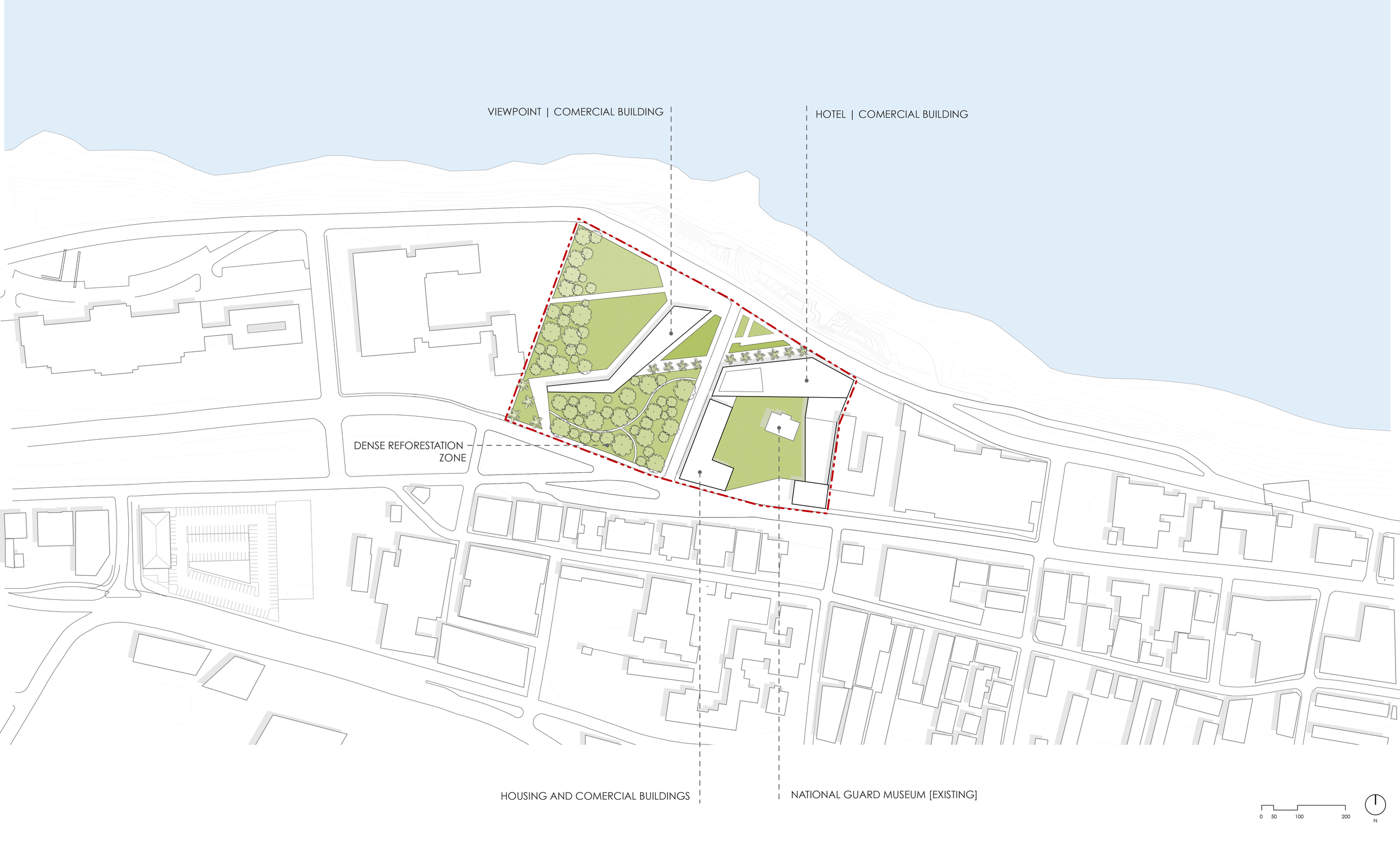
The design breaks the rigidity of the rectangular site by introducing a sequence of views and circulation corridors, directing pedestrian movement outward with a clear node at the urban edge. This framework reconnects Avenida de la Constitución, the School of Tropical Medicine, and the Capitol as integral elements of the urban landscape experience. At its center, a landscape-hybrid structure—housing a commercial and arts program designed by Toro Arquitectos—cuts diagonally across the site, rising gradually from ground level to an elevated observation platform, the “Ocean Podium,” offering panoramic views of the sea and city skyline.

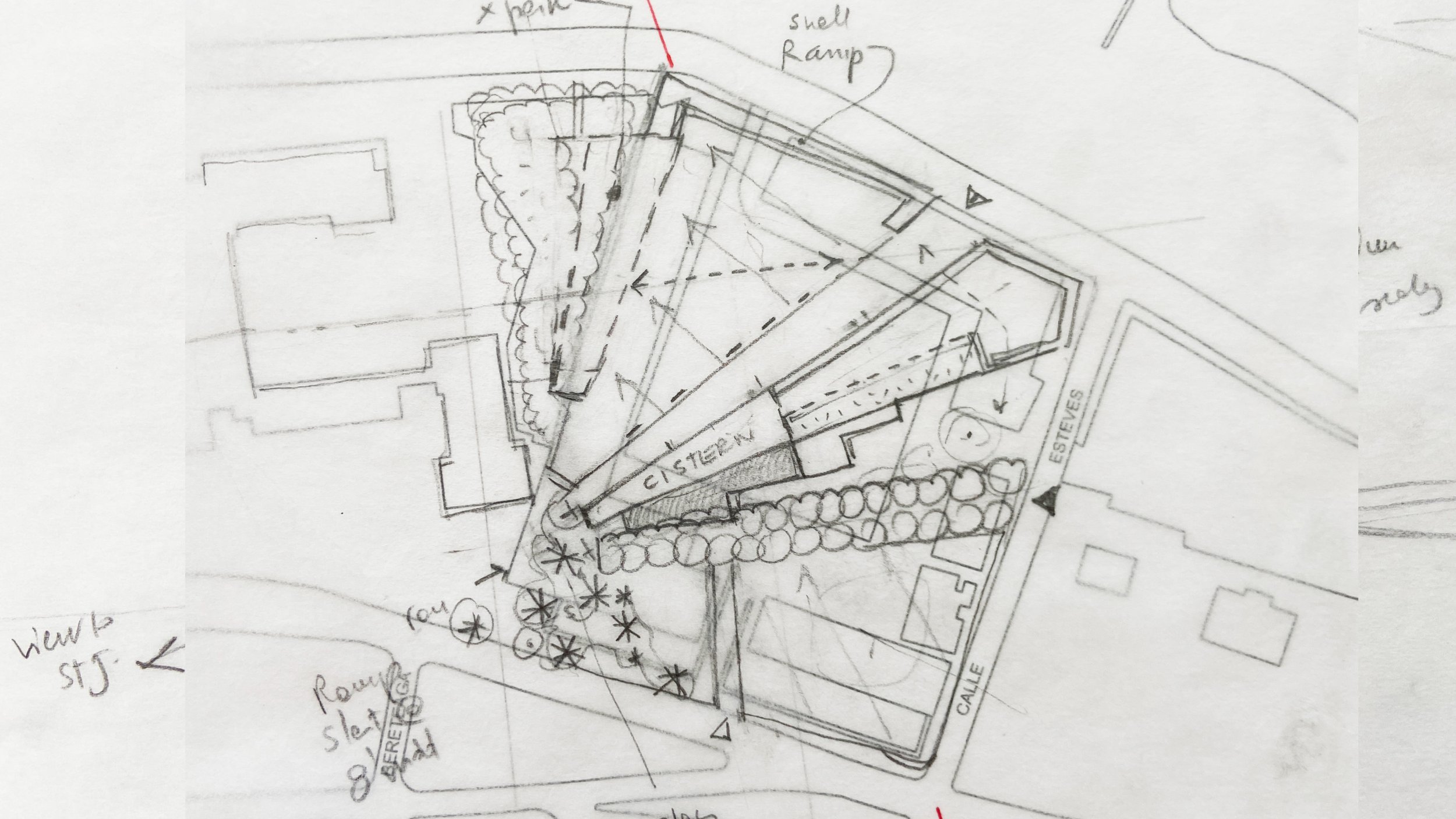
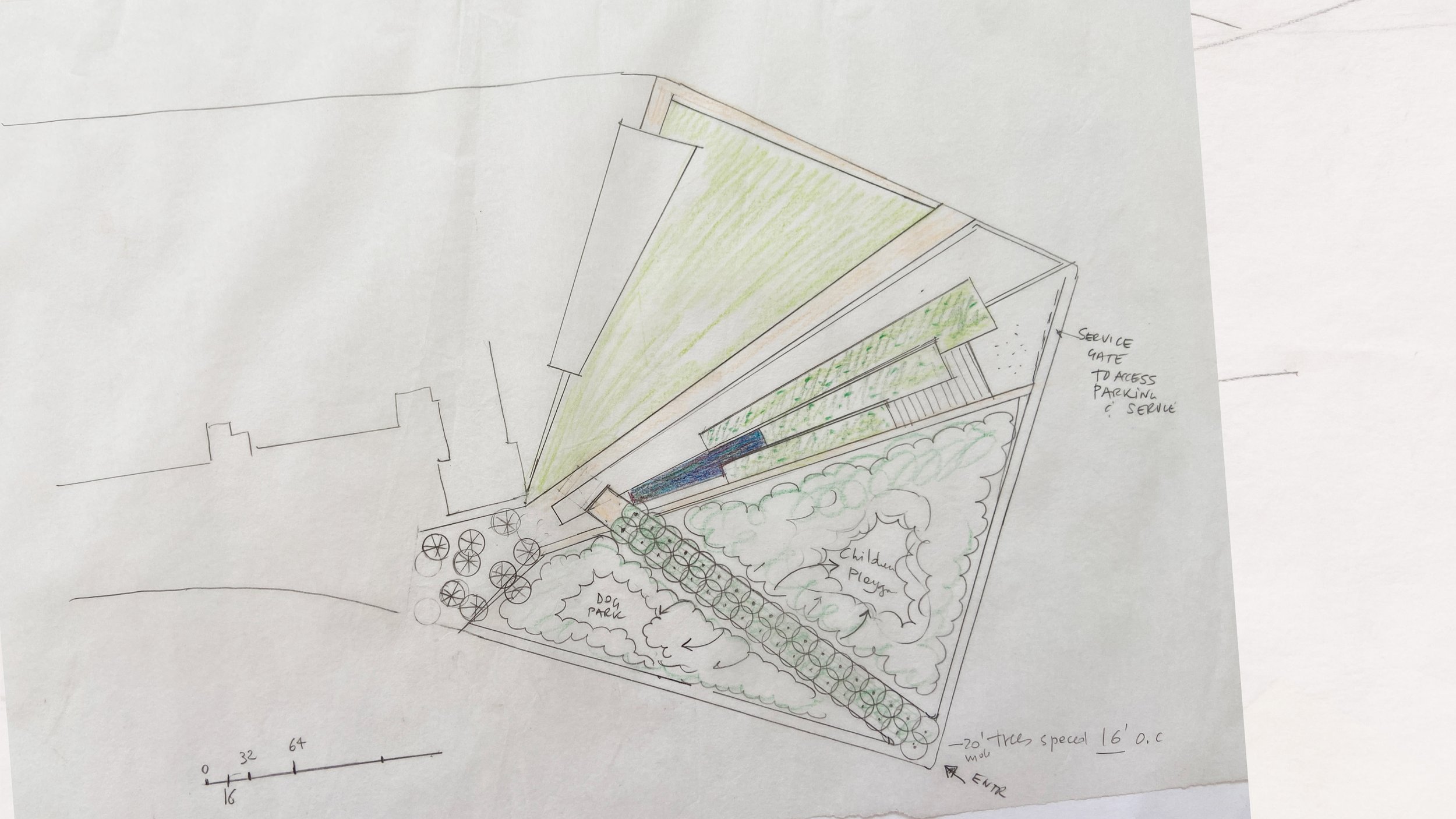


The Ocean Podium is counterbalanced by an elevated, tree-lined walkway rising in the opposite direction to reinforce connections with Old San Juan. A sequence of tiered roof gardens, linked across varying levels, extends the program atop the structure and incorporates a central pond and cistern to harvest rainwater from the sloped roofs. To the west, a proposed restaurant building with a large rooftop terrace would overlook an open lawn, recalling the experience of ascending Old San Juan’s historic fortresses of El Morro and San Cristóbal. In the south corner, adjacent to Avenida Ponce de León, a bosque accommodates a playground and dog park, adding layers of community use to the site.
CONCEPT DEVELOPMENT
We did not participate in the subsequent development phase, which extended the proposal east of Esteves Street to include the National Guard Museum site with a planned mixed-use building compound. The park’s success was envisioned to depend on increased residential density, attracting developers and stakeholders to invest in the area. Ultimately, the project did not advance, and the envisioned hybrid building-landscape compound was not realized.

CONCEPT BIRD’S VIEW


AFTERWARD
Although the proposal was never implemented, it set forth a vision for reactivating a neglected edge of Old San Juan by linking historic landmarks, reclaiming underused land, and introducing hybrid public spaces. The project demonstrated how design could spark dialogue about new urban strategies—balancing heritage, community use, and economic investment—to guide future interventions in the district.

