
RAINFOREST INTERVENTIONS
2026 ASLA FLORIDA PROFESSIONAL AWARD WINNER - RESIDENTIAL CATEGORY
PROJECT STATEMENT
The context is 400 acres of private land dedicated to forest conservation and equestrian recreation. This multi-year, phased project focused on stabilizing steep cut slopes, enhancing biodiversity with 79 native and endemic species. It provided outdoor spaces, horse stables, Paso Fino riding trails, and the residence’s landscape grounds. Untrained staff from the nearby “barrio” were engaged, empowering them through hands-on learning. Together with the landscape architect, they implemented low-impact solutions for drainage, erosion, and flood control, while regenerating soil and forest in all disturbed areas. Plant growth thrived, even as Hurricane Maria (Category Five) directly struck, testing the site's resilience and methodology used.
PROJECT NARRATIVE
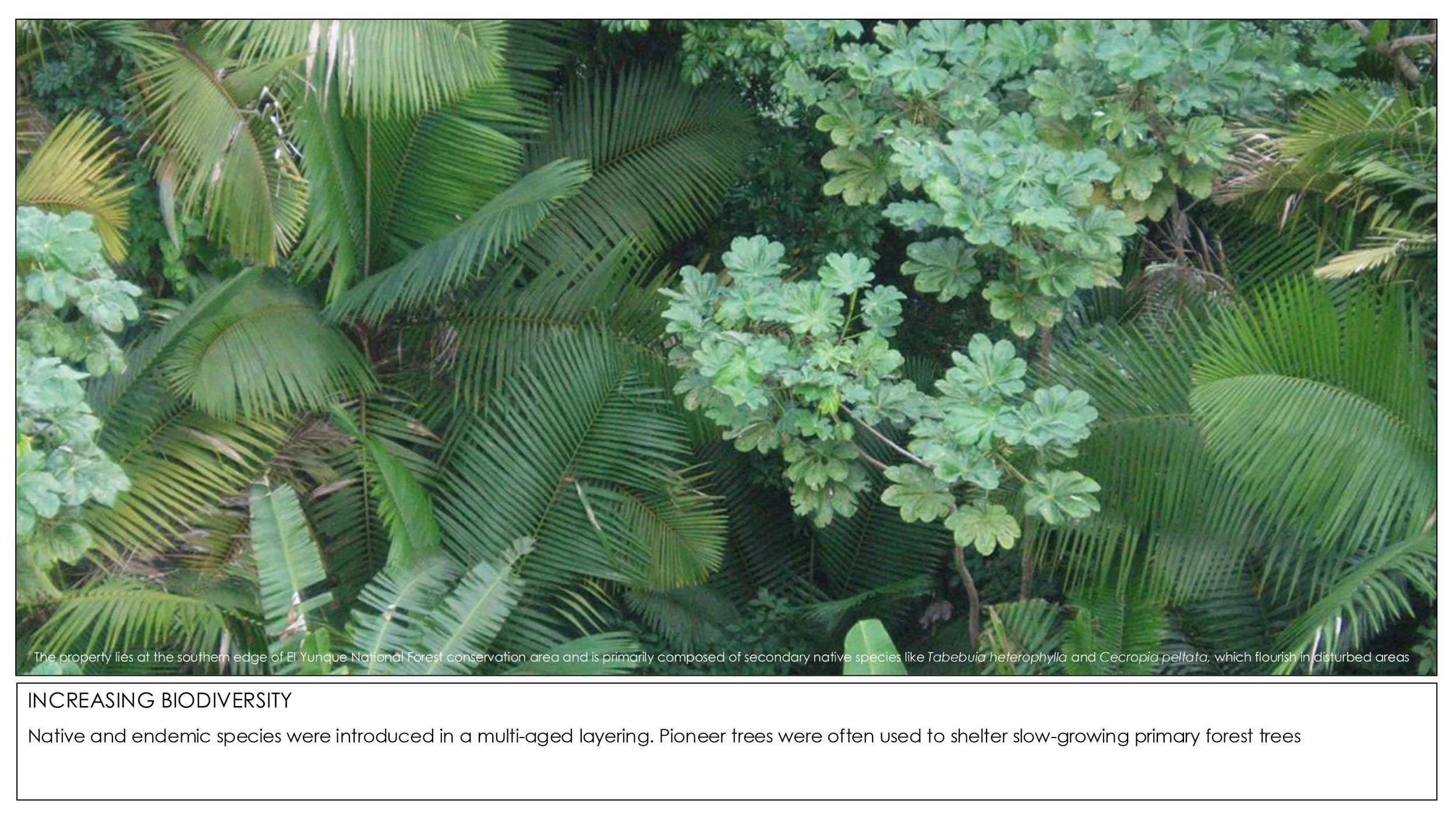
The property lies south of El Yunque National Forest and is primarily composed of secondary native species that thrive in disturbed areas. The endemic Prestoea montana palm suggests migration from its typical higher-elevation habitat. The Luquillo Mountains, where the site is located, receive moisture-laden trade winds from the Atlantic Ocean and Caribbean Sea, with rainfall varying from 95 to 195 inches, depending on elevation.
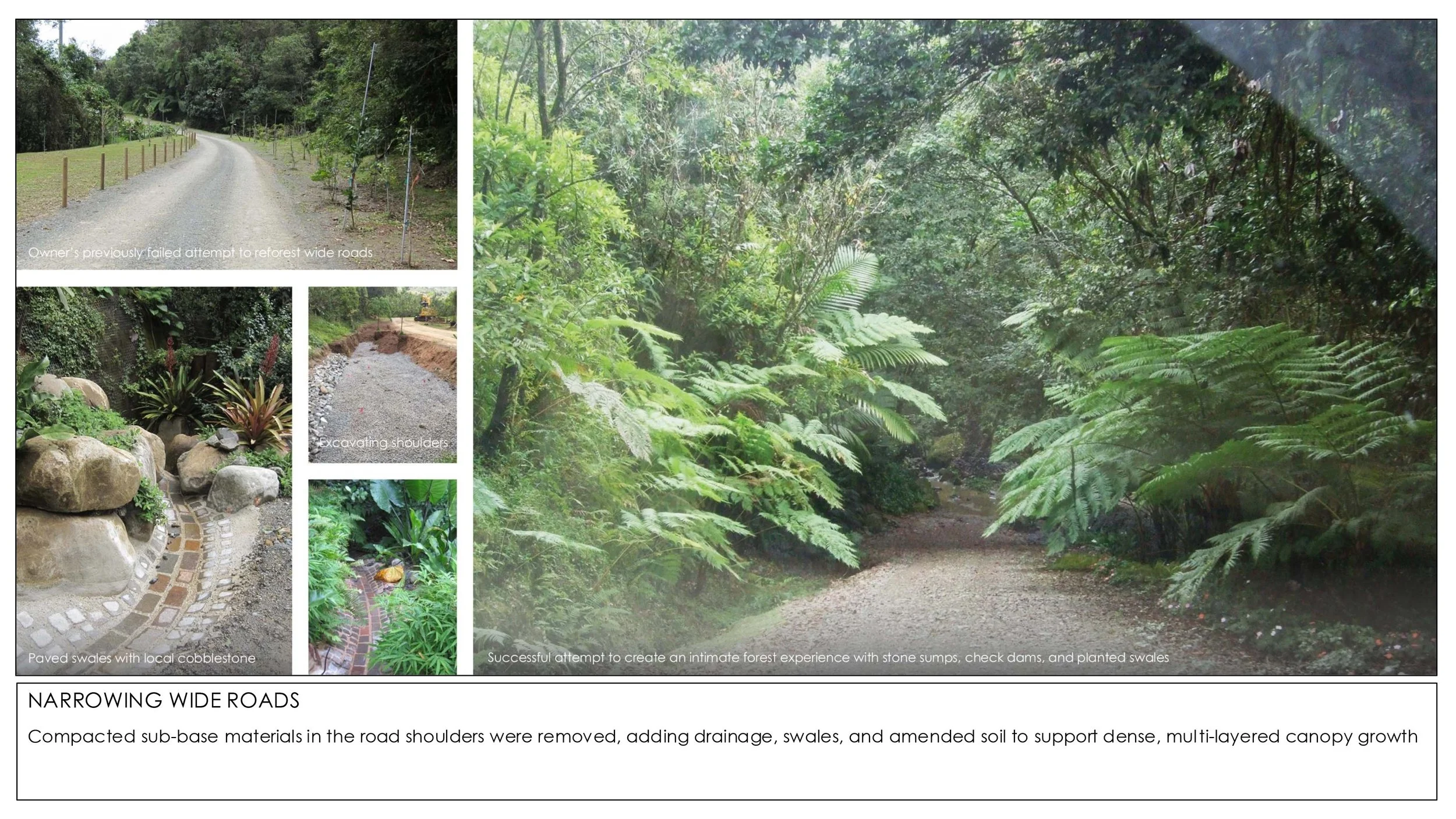
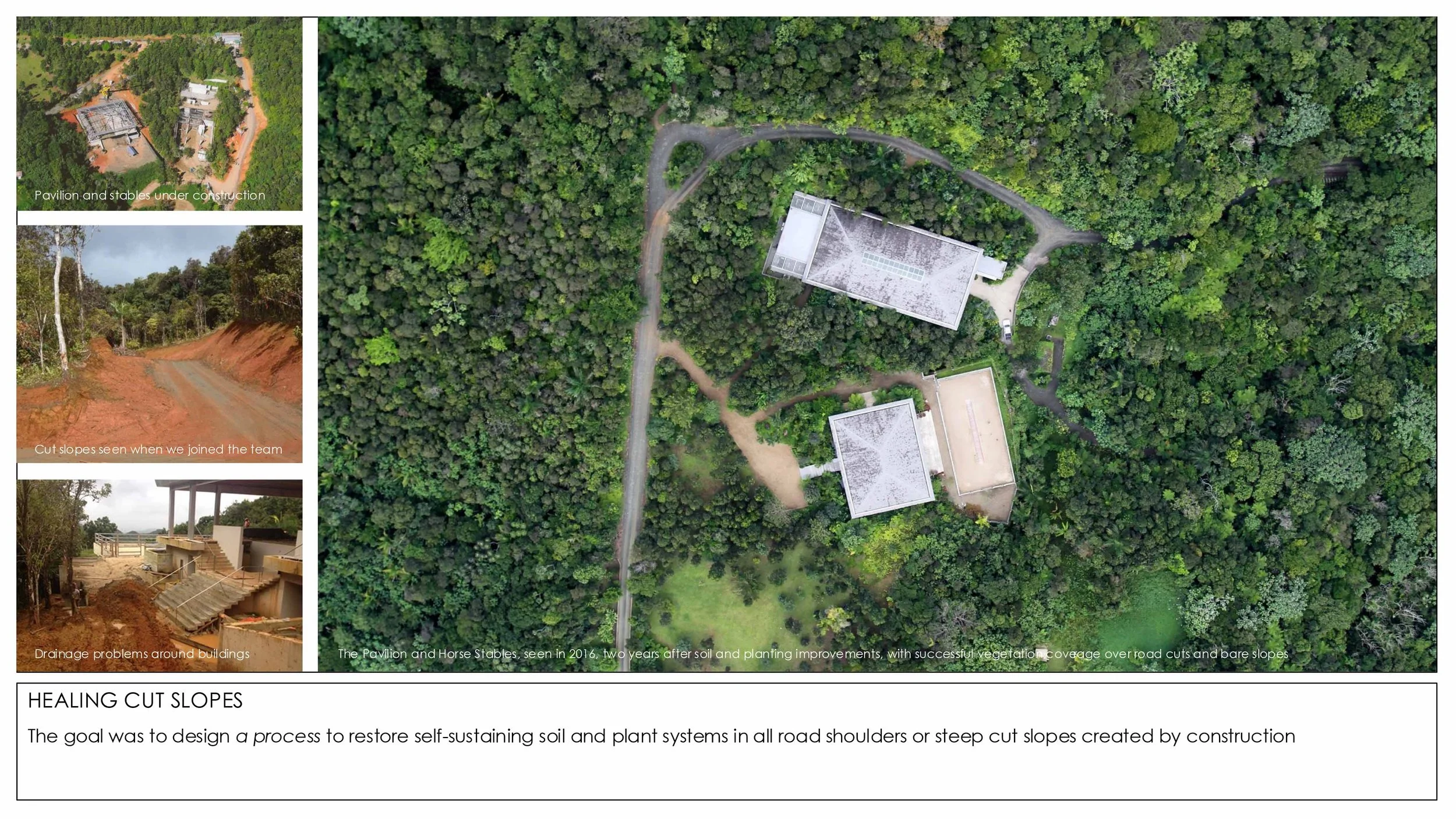
The owners had long attempted, without success, to mitigate the effects of existing large unpaved roads by planting similarly sized and spaced small trees in 4" of soil over the shoulders' graded aggregate base. The first intervention was to narrow the roads by removing the compacted sub-base in their shoulders, adding drainage and amended soil to support dense, multi-layered canopy growth. Fast-growing pioneer species were often used to shelter slower-growing primary forest species (e.g., Manilkara bidentata, Guarea guidonia, Buchenavia tetraphylla). A multi-year phased planting allowed for the cultivation of hard-to-find species under the designer’s guidance in the owner's nursery. In two to three years, a forest ecotone emerged, making the roads nearly invisible from the air.
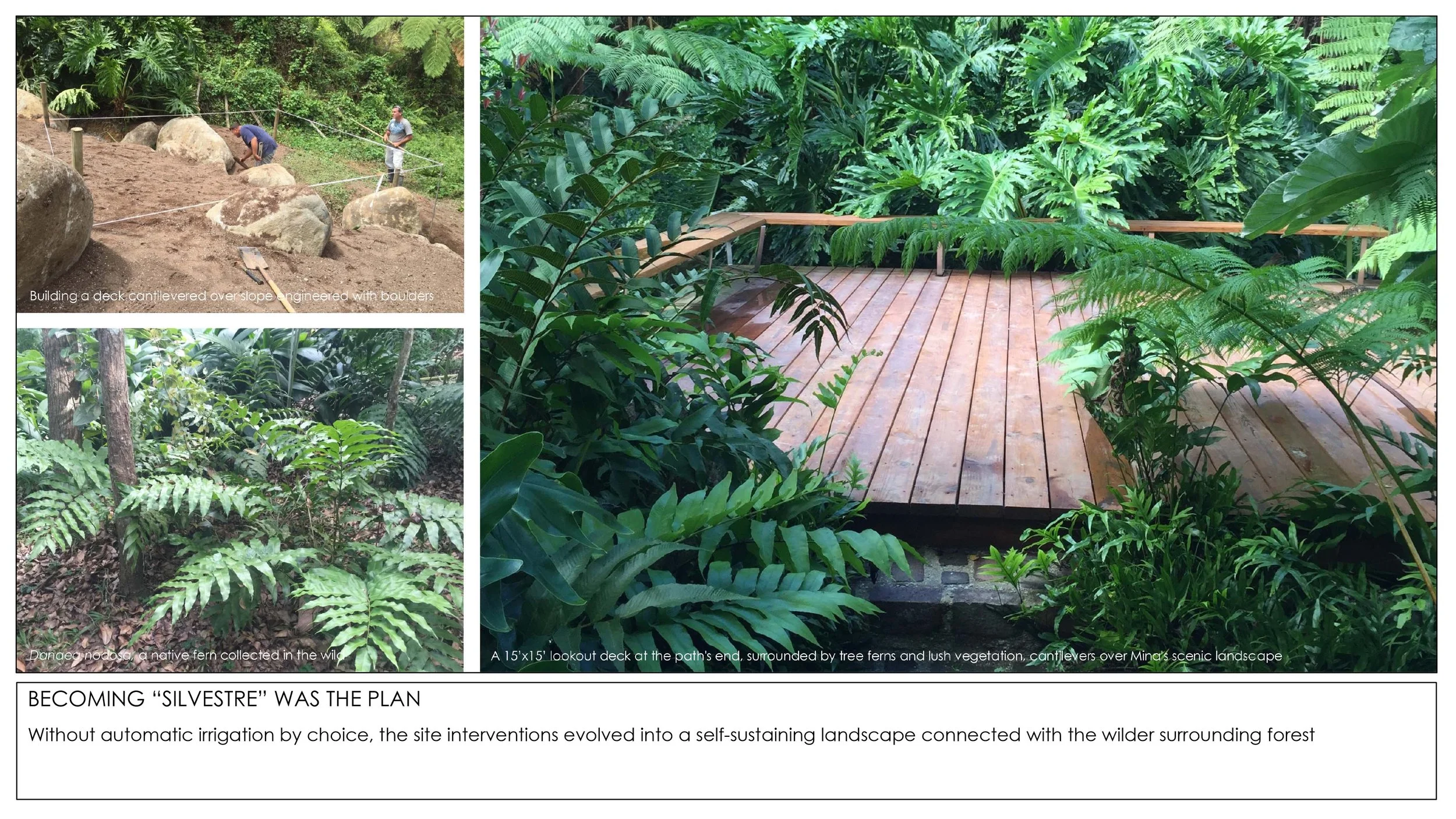
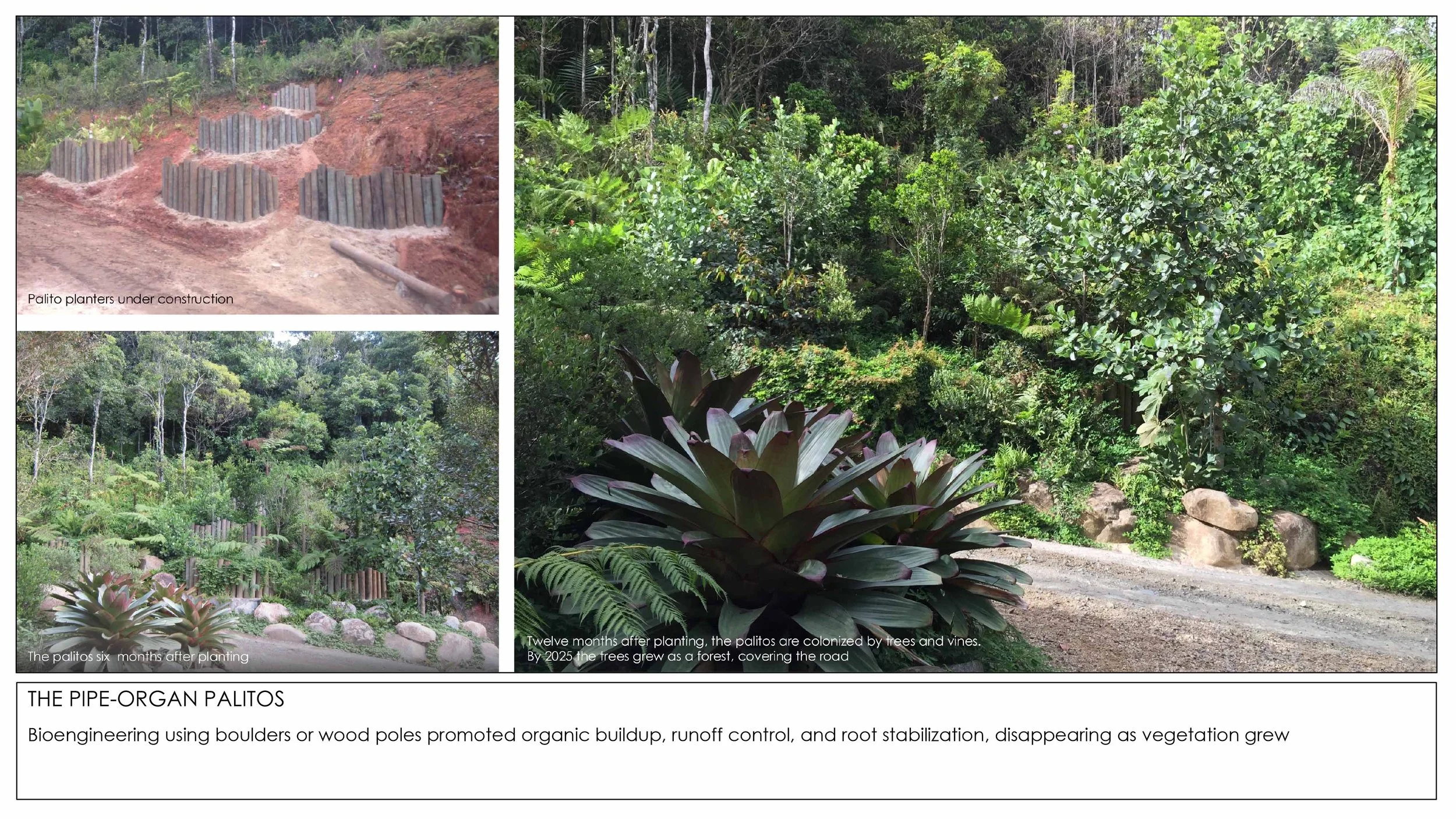
The area's red-yellow soils are rich in iron and aluminum oxides/hydroxides, with thin organic layers that decompose rapidly. The project goal was to design the process to restore self-sustaining soil and plant systems on shoulders or steep cut slopes created by construction. Low-impact bio-engineering techniques using boulders or wood poles were used. They helped organic matter accumulation and plant roots stabilization, disappearing as vegetation grew.
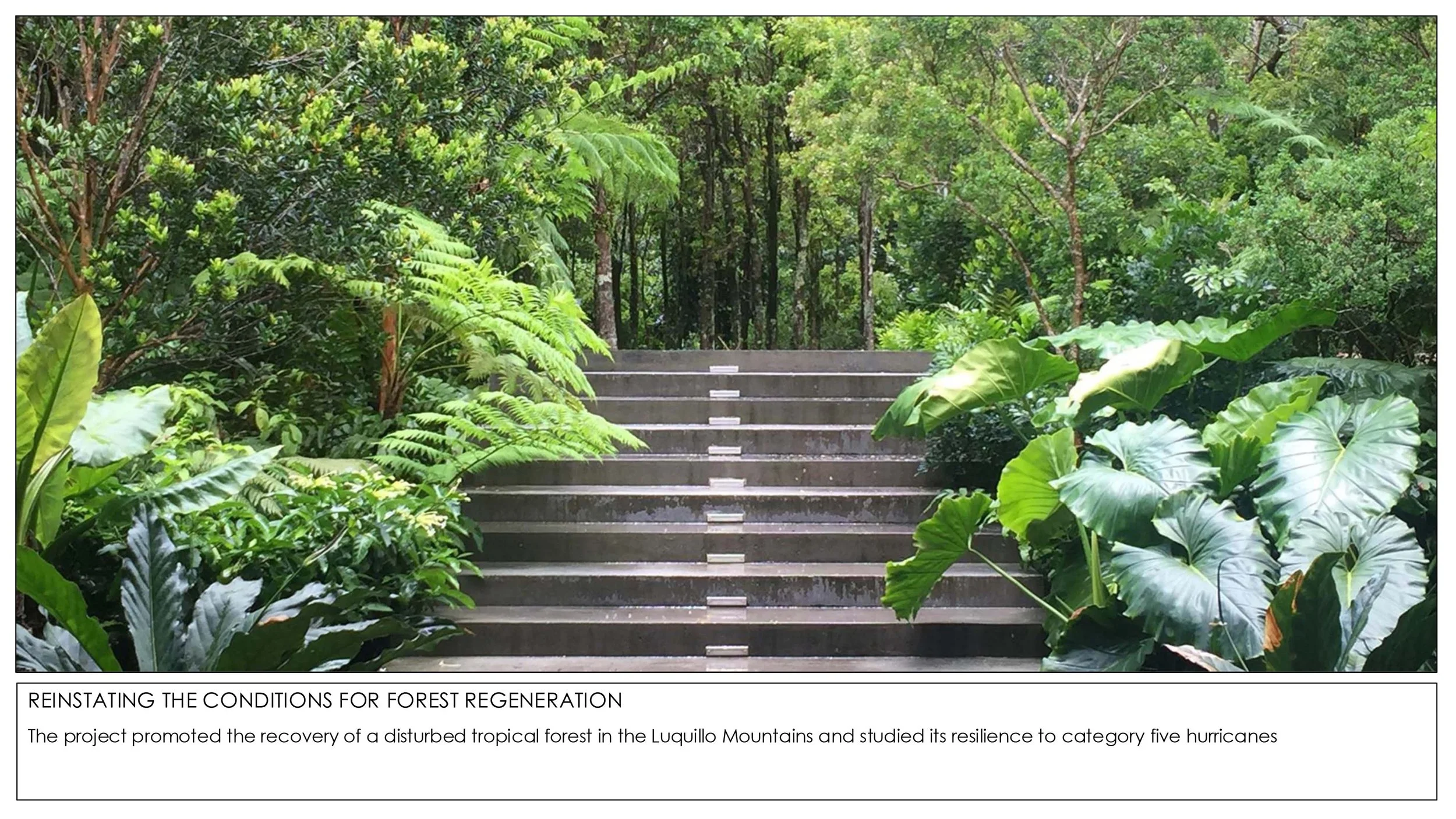
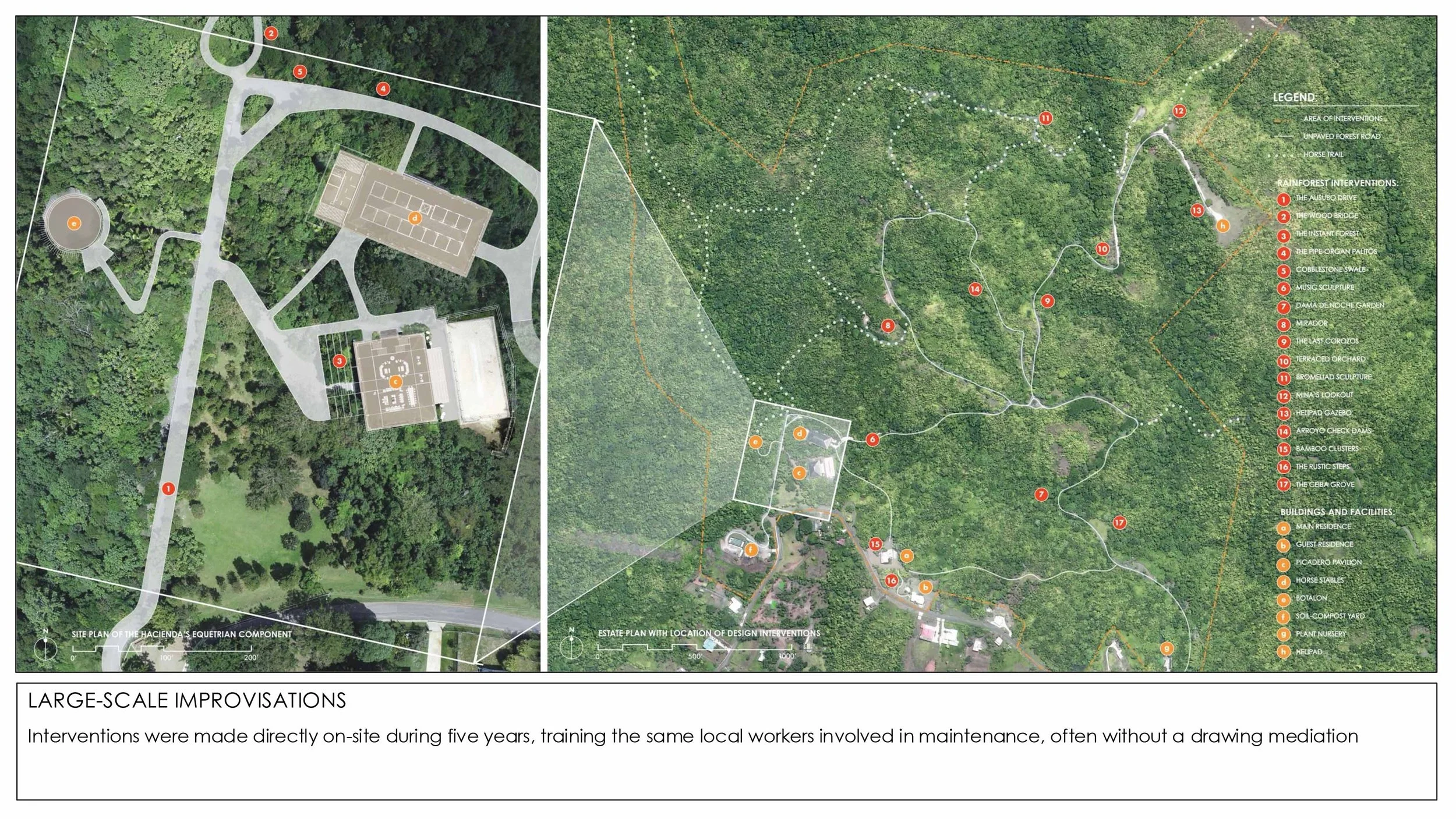
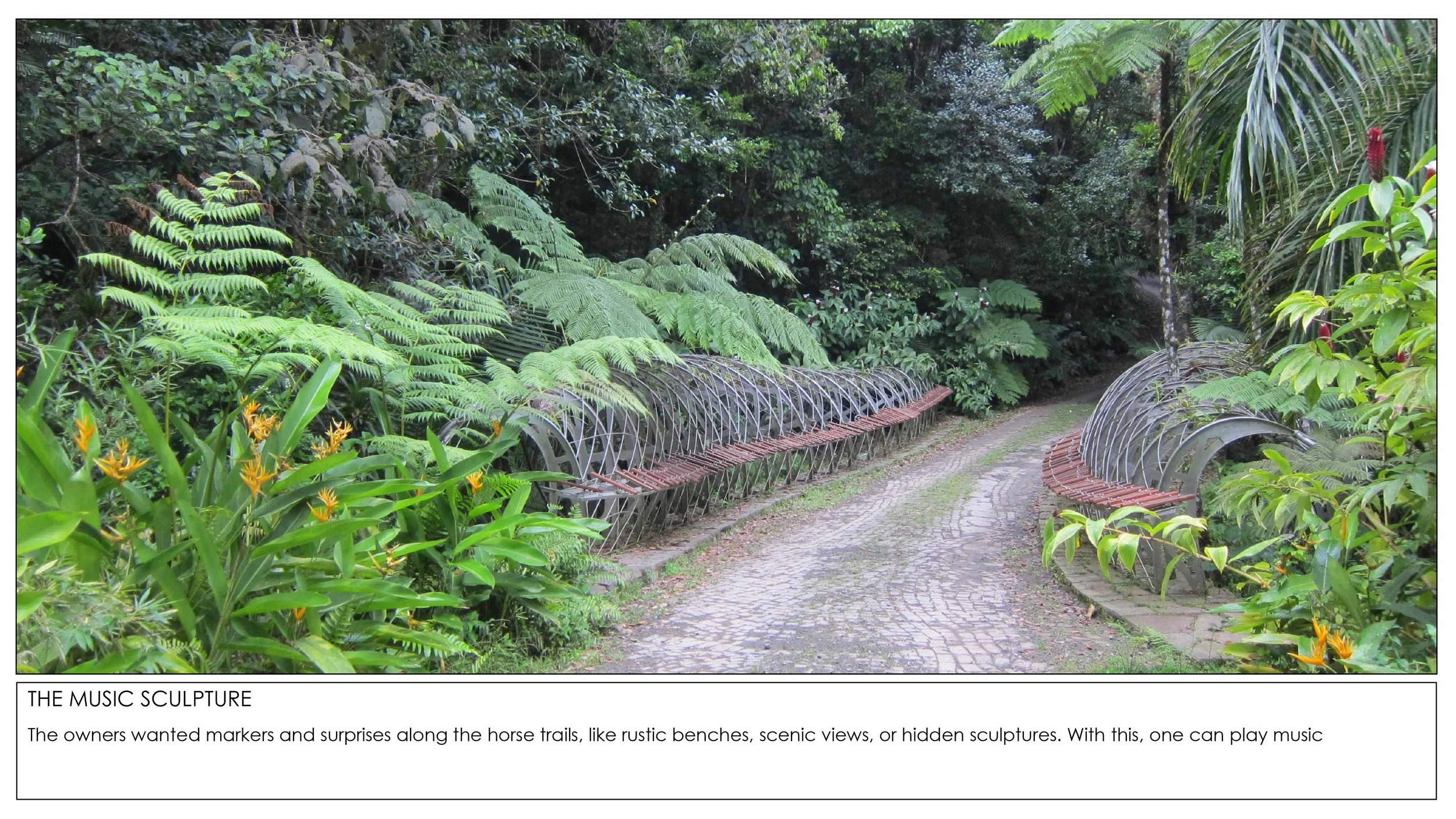
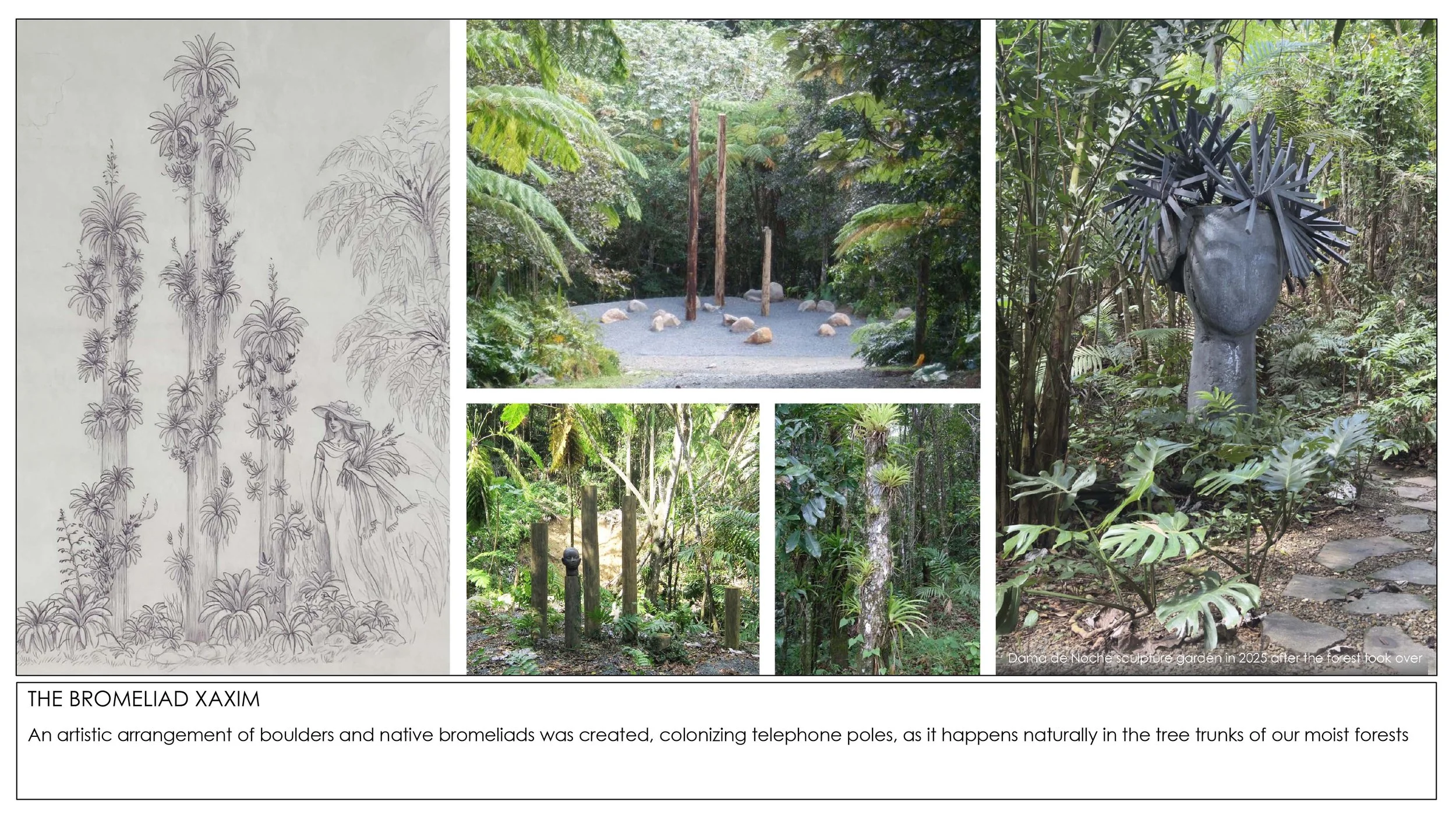
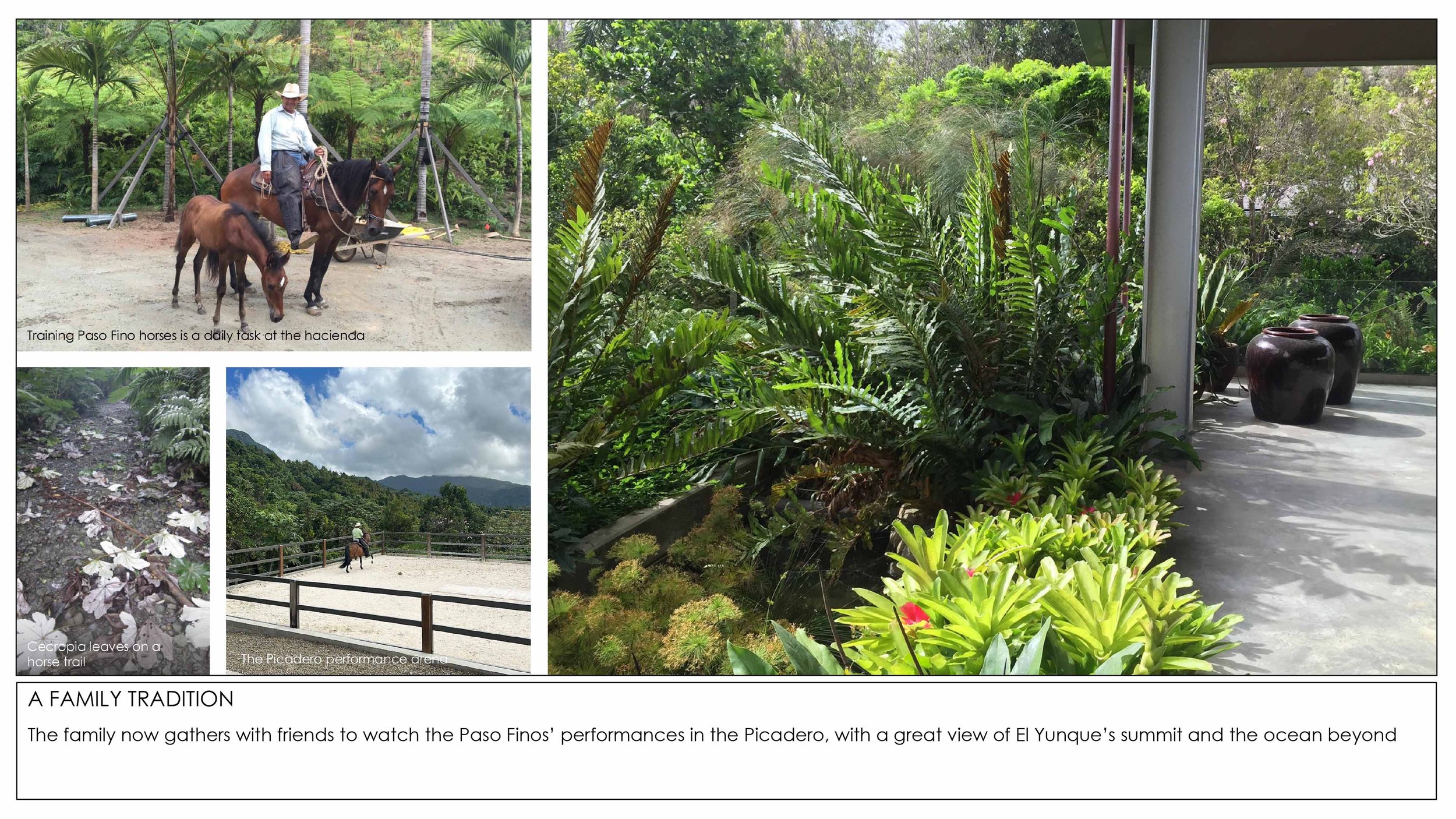
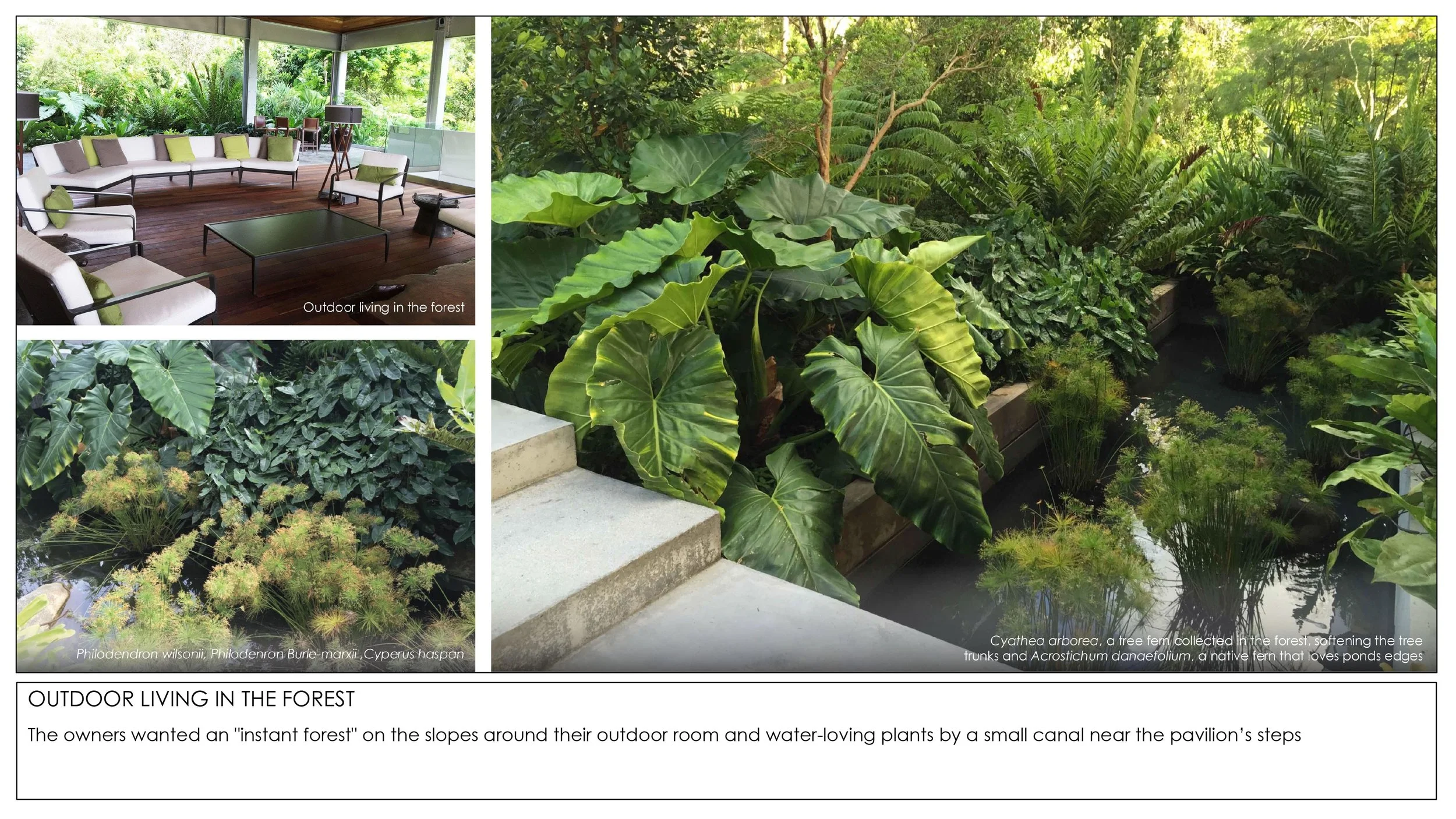
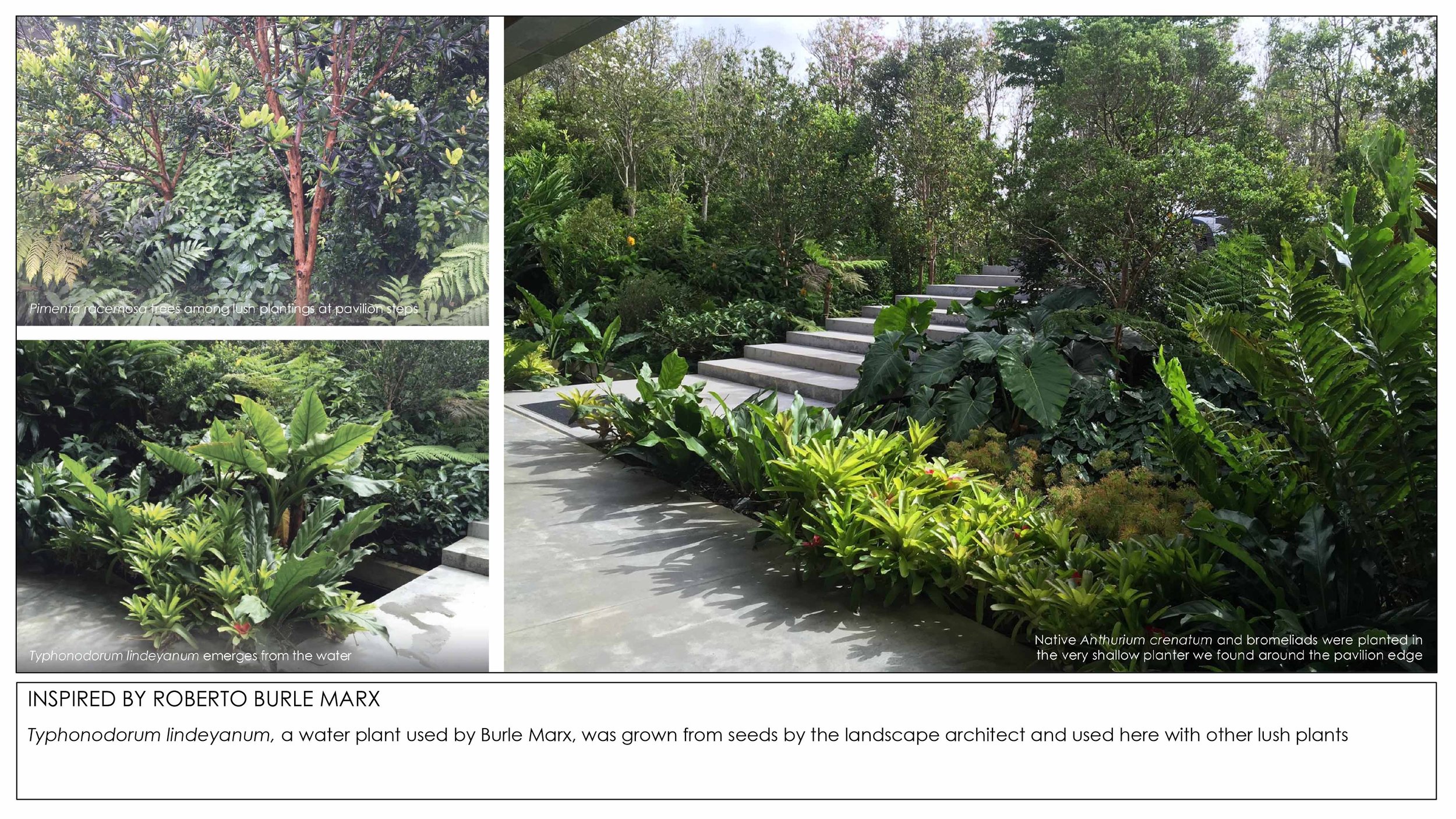
Grading and stormwater design with paved or vegetated swales and check-dams were provided for the property roads, horse stables, and the Picadero Pavilion, which was being built on a large, cantilevered terrace held by gabions. The owners wanted here an "instant forest" plus water-loving plants at a canal by the pavilion’s steps. Additionally, they desired markers along the horse trails, including places to rest, a rustic bench, scenic outlooks, and hidden sculptures settings. One proposal involved colonizing telephone poles with native bromeliads, while another involved placing wood poles in organ-pipe forms to slow runoff and support pioneer species.
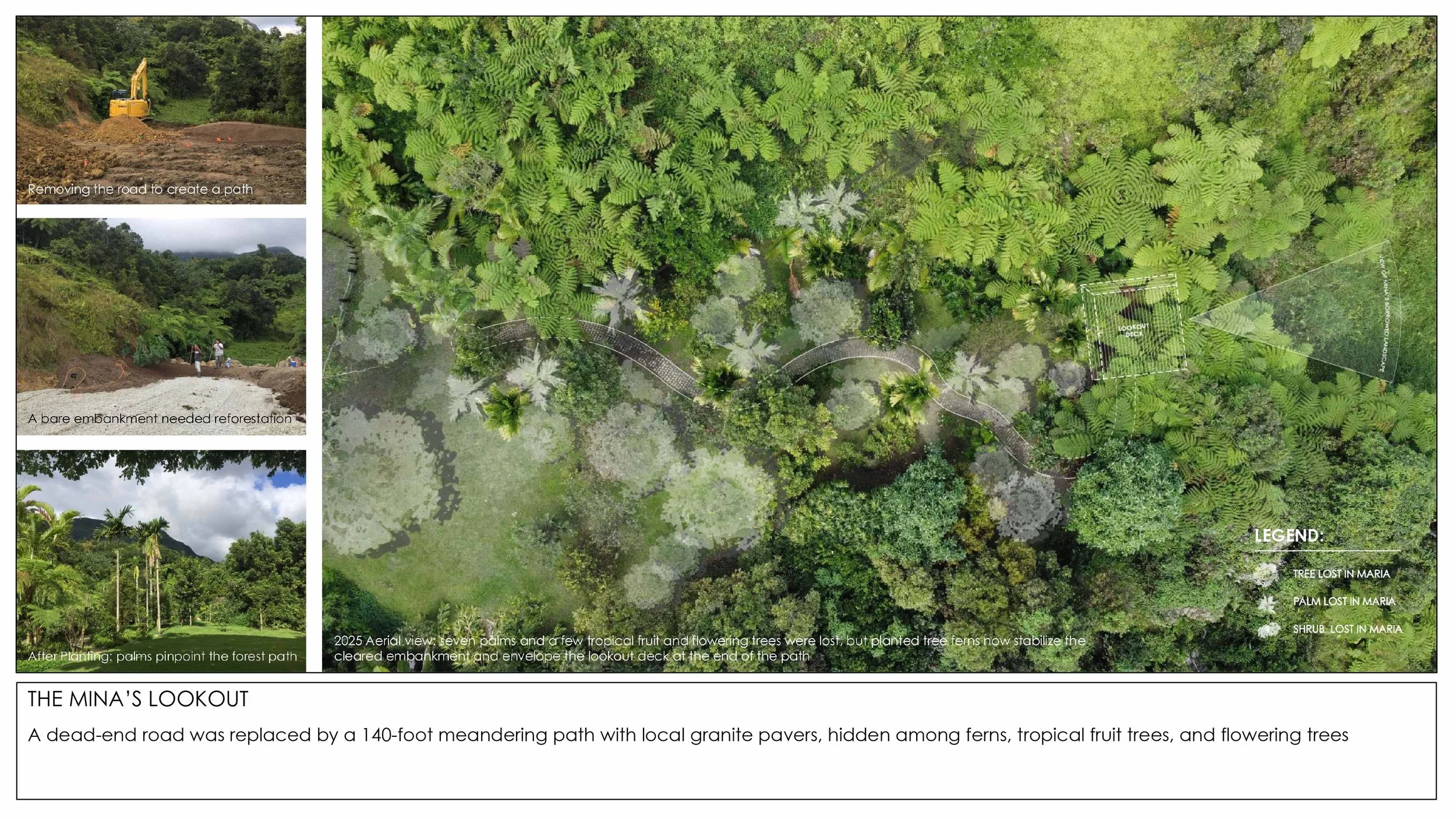
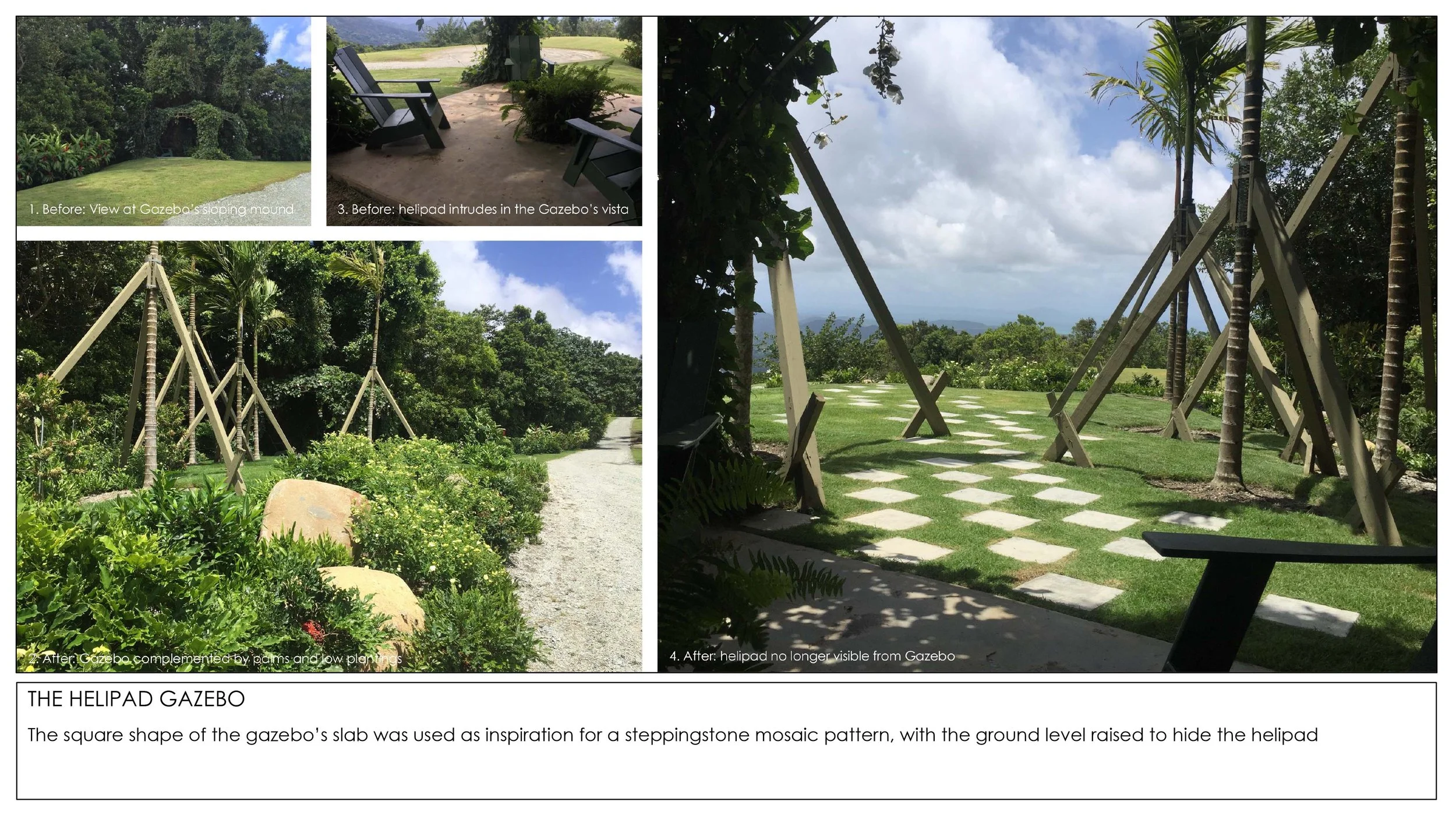
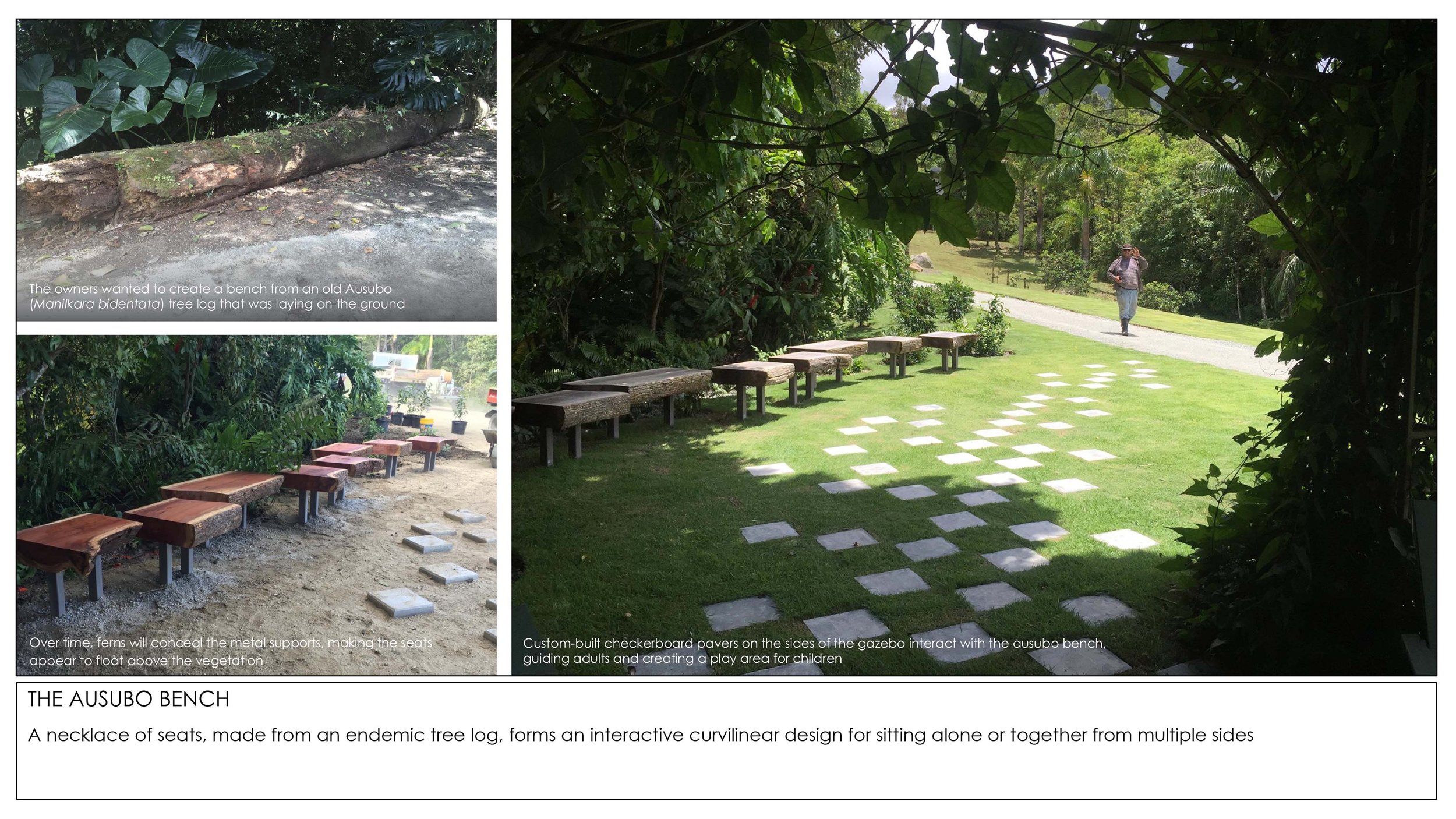
Most interventions were executed as large-scale improvisations. Design decisions were made quickly with an excavator, backhoe, and workers, relying on the designer’s experience with just a sketch. One unpaved road ending at an area called Mina was replaced with a 140-foot meandering path of local granite pavers, hidden among tropical fruit and flowering trees. At the path's end, a small deck overlooks now the Mina’s clearing and El Yunque Forest. At another road end, a gazebo sat on an unusable grass mound. The gazebo’s square slab inspired a steppingstone mosaic, the mound was terraced to hide the nearby helipad, and a fallen log from the endemic Ausubo tree was reused to make a rustic necklace of benches.
This project is a case study for designed forest regeneration in disturbed tropical sites. Many trees fell during Hurricane Maria but were quickly raised, staked, and survived. Those that broke, created shelter for new forest seedlings sprouting in the spaces left from the adopted dense spacing, demonstrating the potential for creating resilient forest plant communities that can adapt to strong storms.