
A TROPICAL NON-GARDEN
2026 ASLA FLORIDA PROFESSIONAL AWARD WINNER - RESIDENTIAL CATEGORY
PROJECT STATEMENT
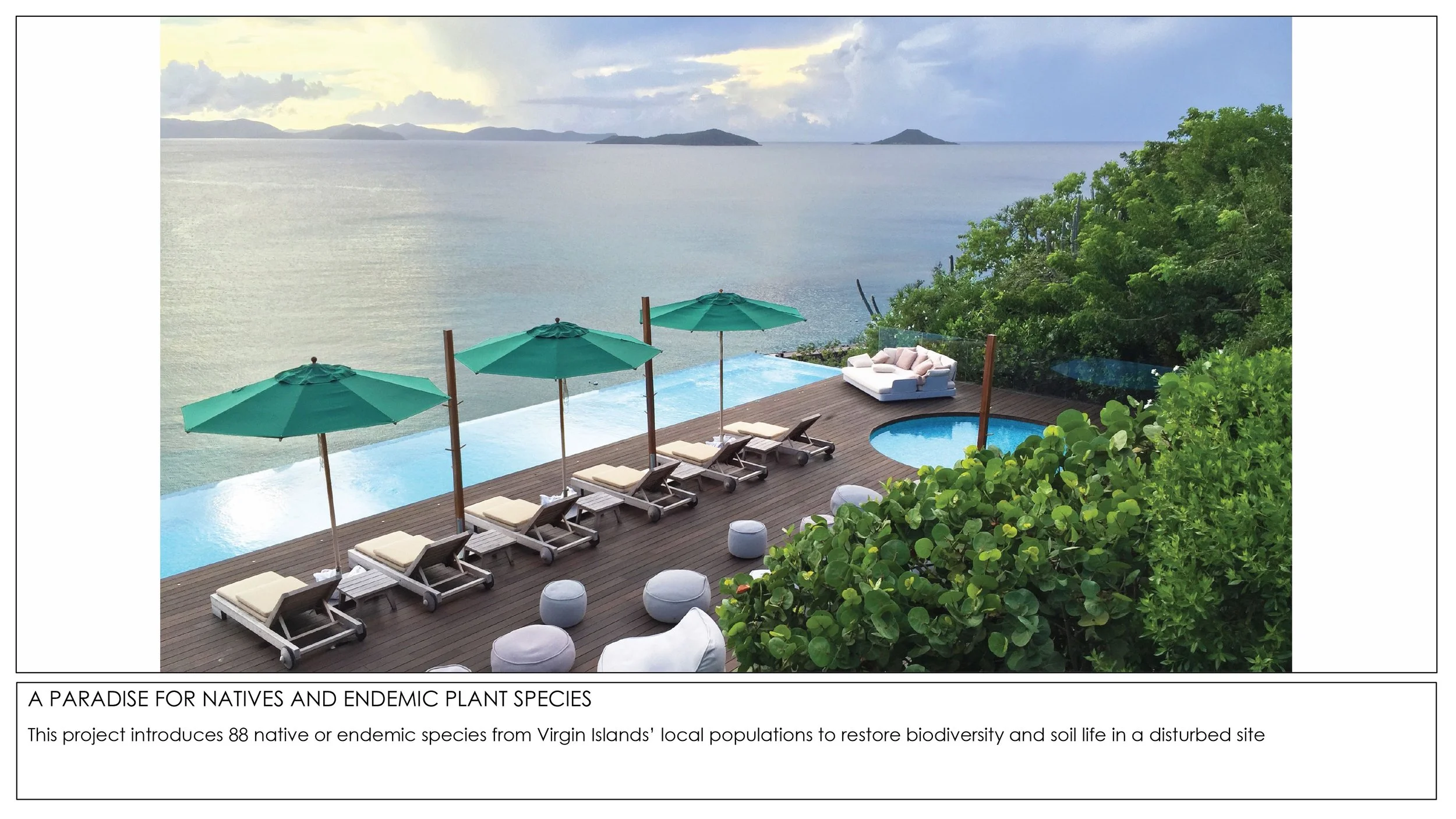
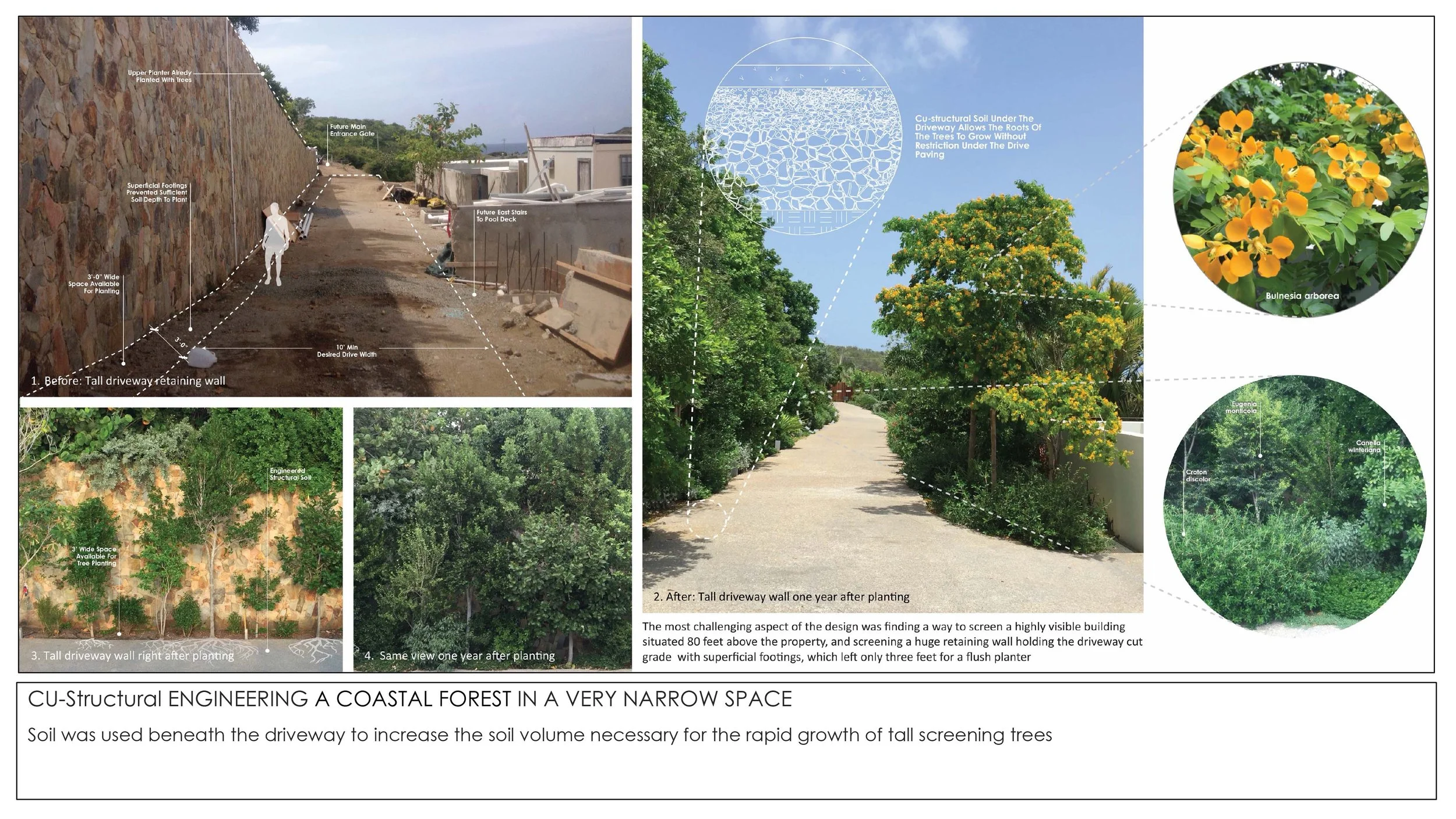
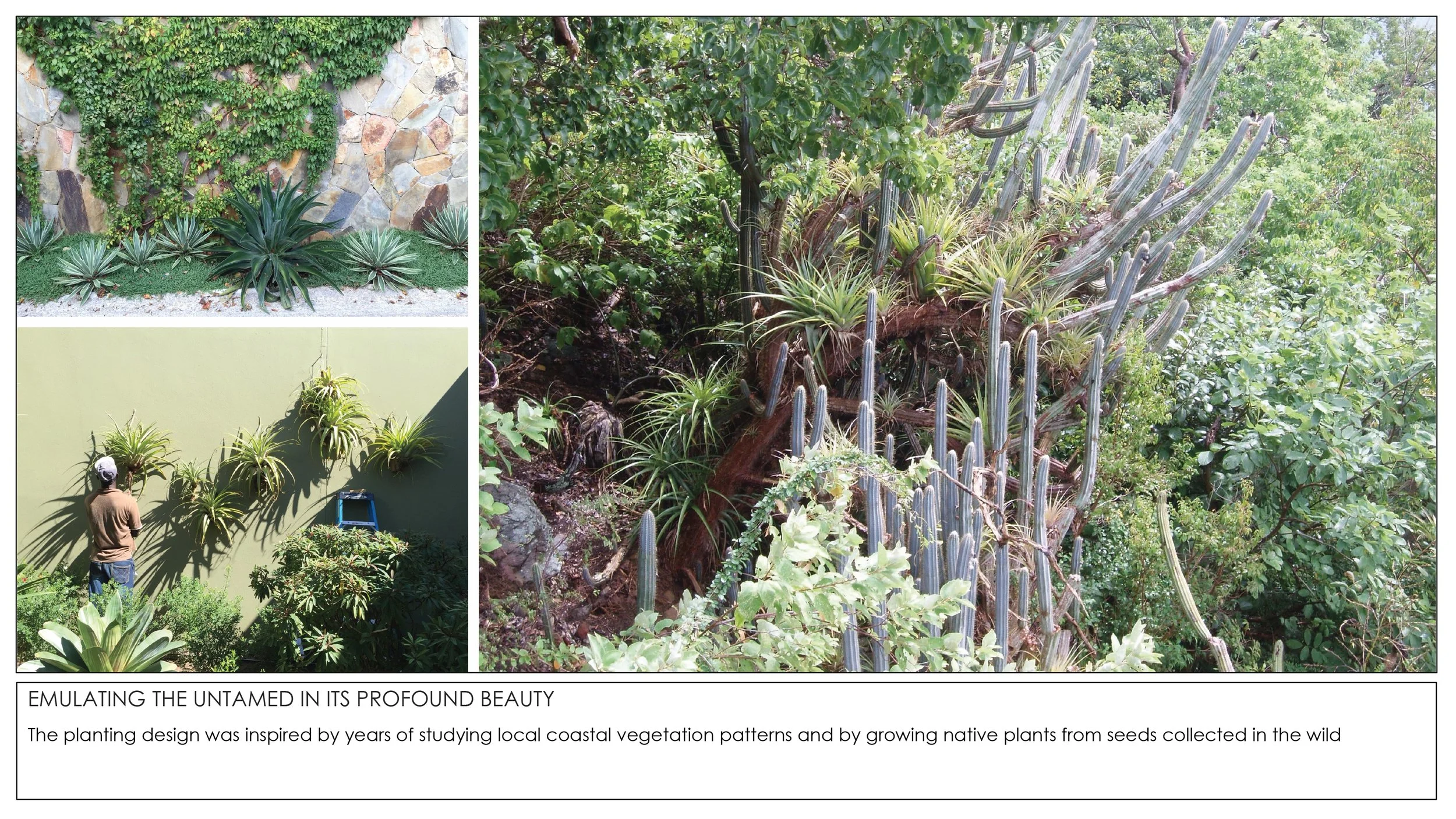
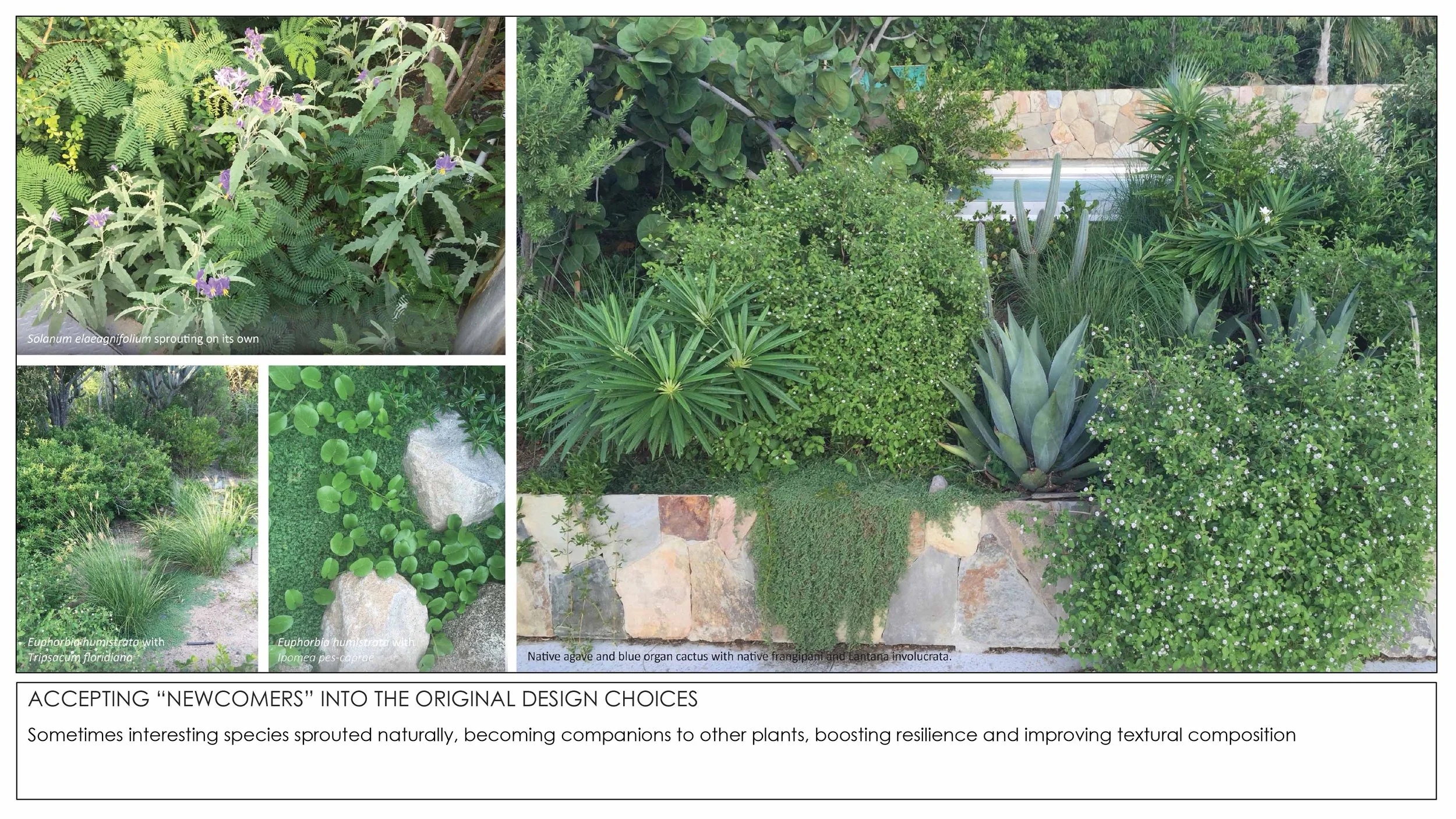
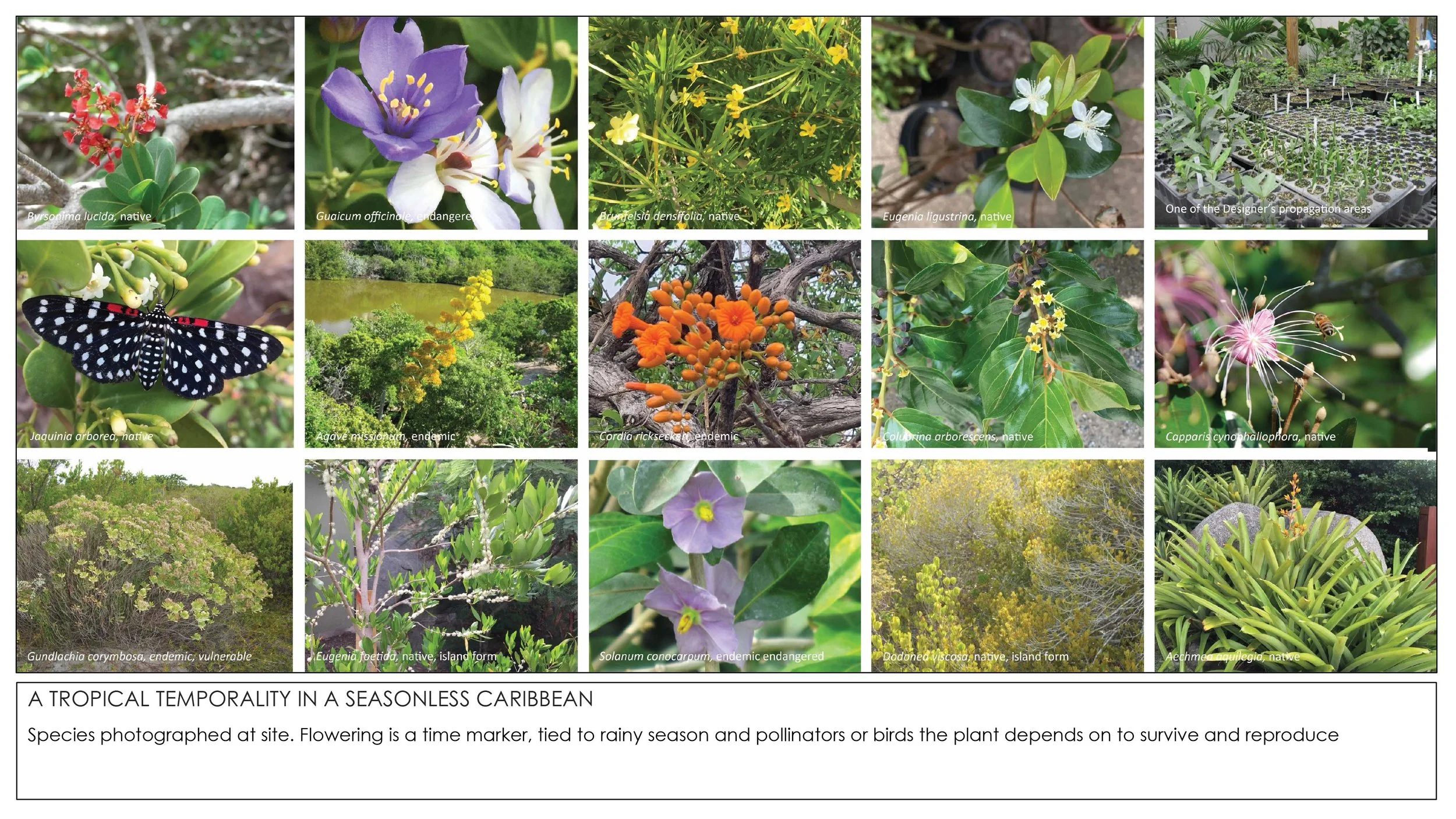
This project challenges the stereotype that a desirable tropical landscape consists of lawn, palm trees, and resort-like ornamentals—plants typically imported from Florida’s commercial growers to the Caribbean. It advocates for the development of a local native plant nursery trade, which is currently absent in the region. To promote biodiversity on a heavily disturbed site, 87 different native and endemic species were introduced, many grown from seeds collected from local populations and propagated in the designer’s plant collection. To reinstate suitable conditions for assisted recovery, low-tech methods were used, including CU-Structural Soil under the drive to increase soil volumes—an innovative approach for the islands.
PROJECT NARRATIVE
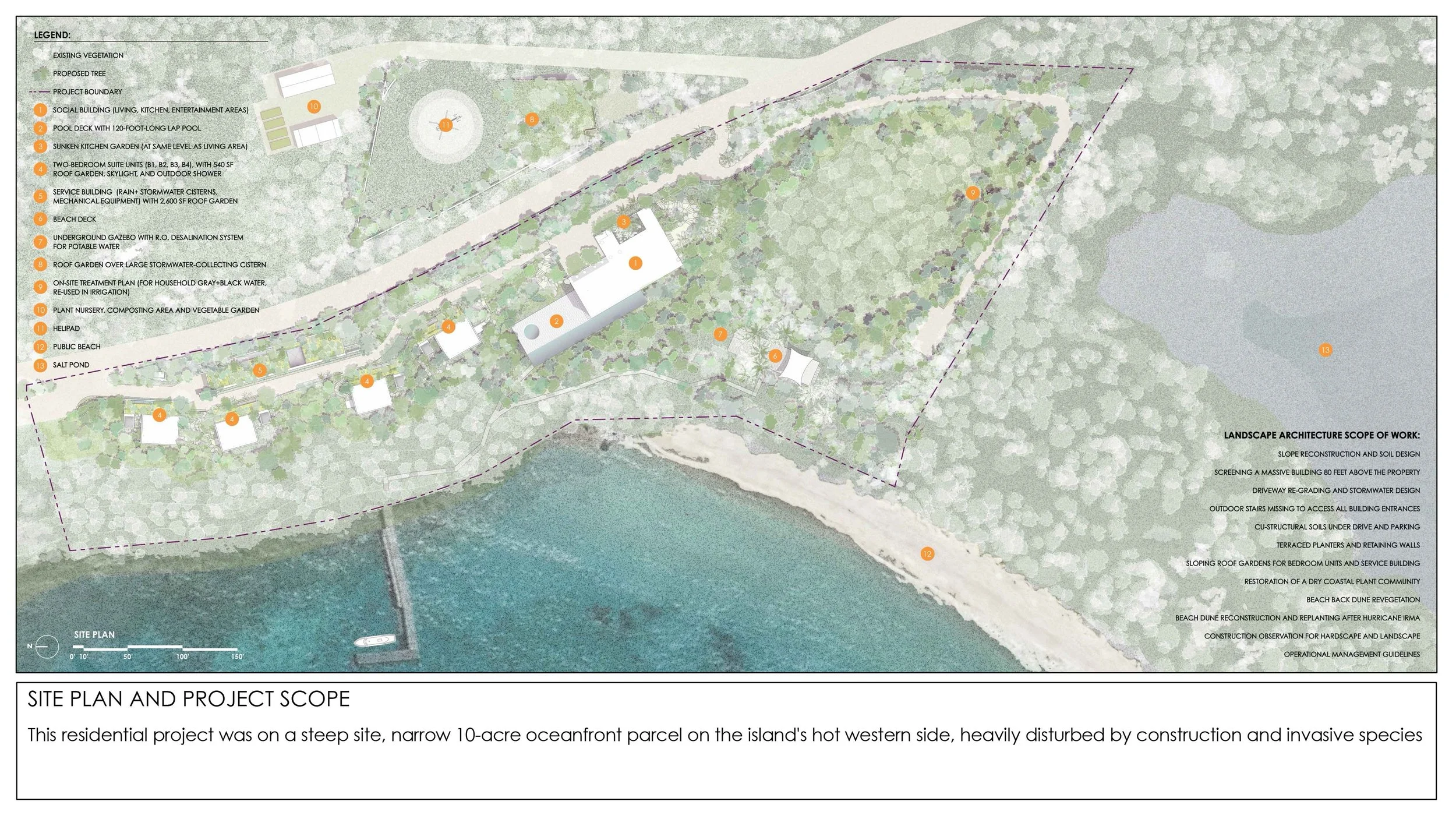
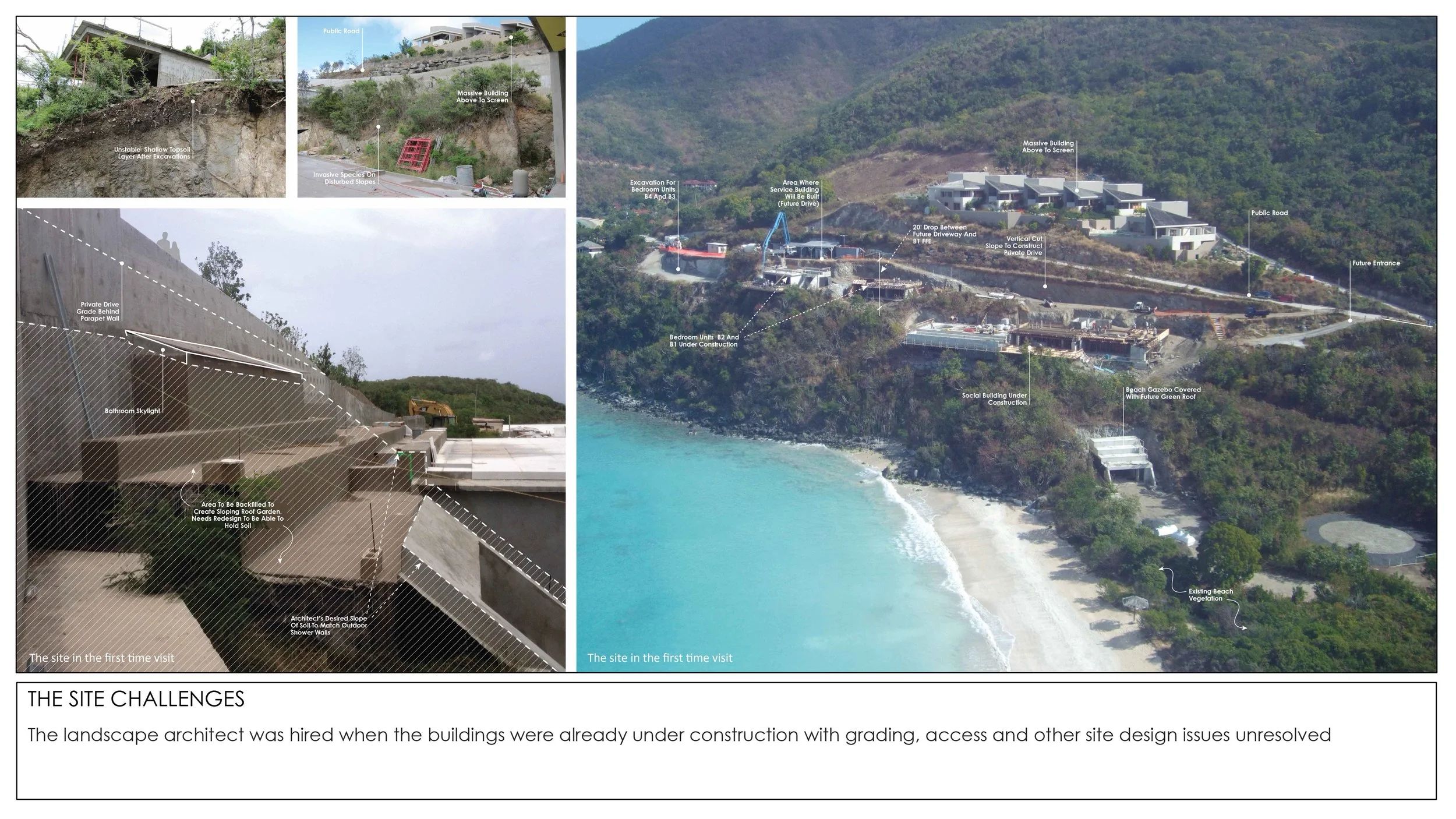
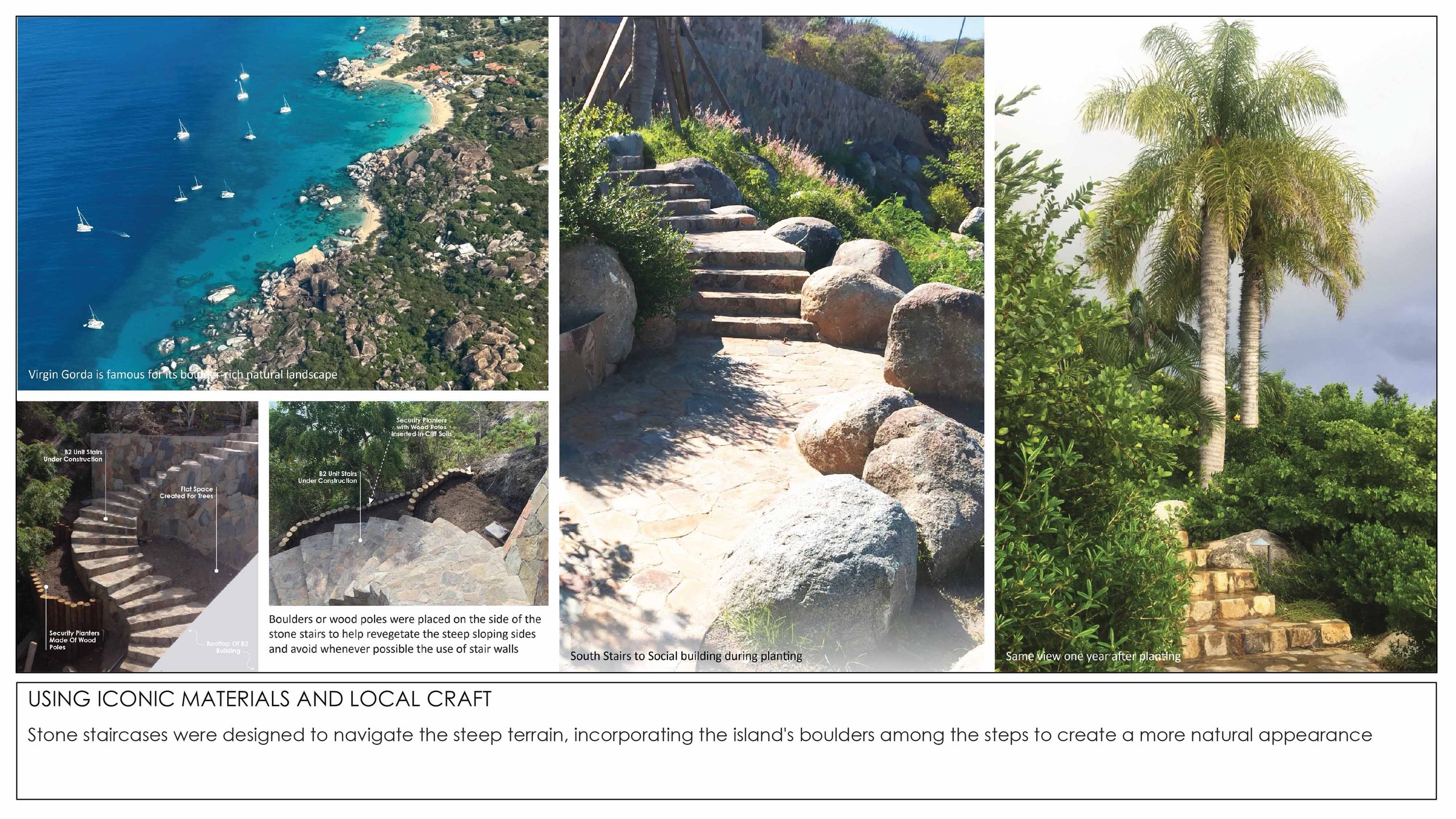
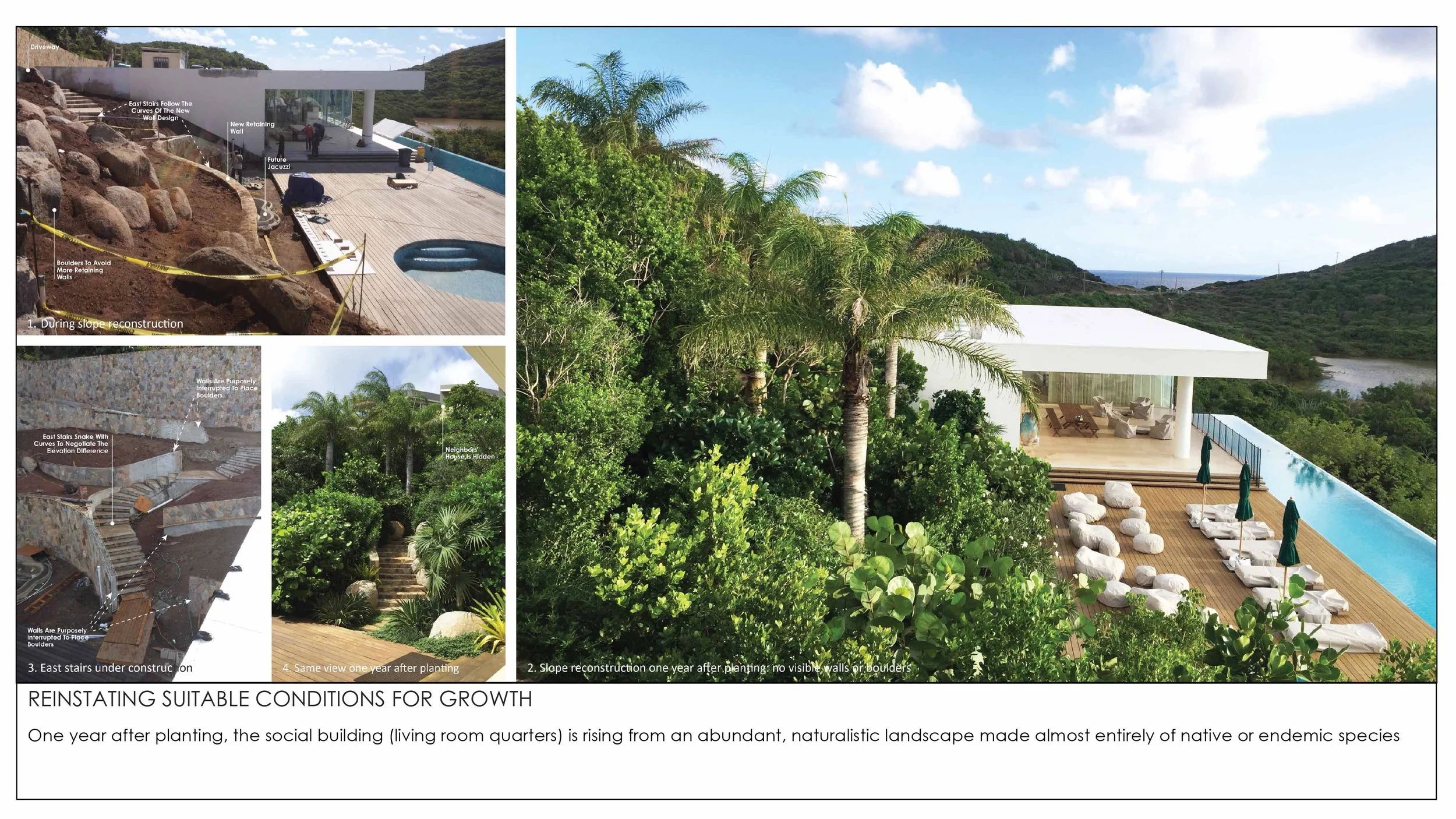
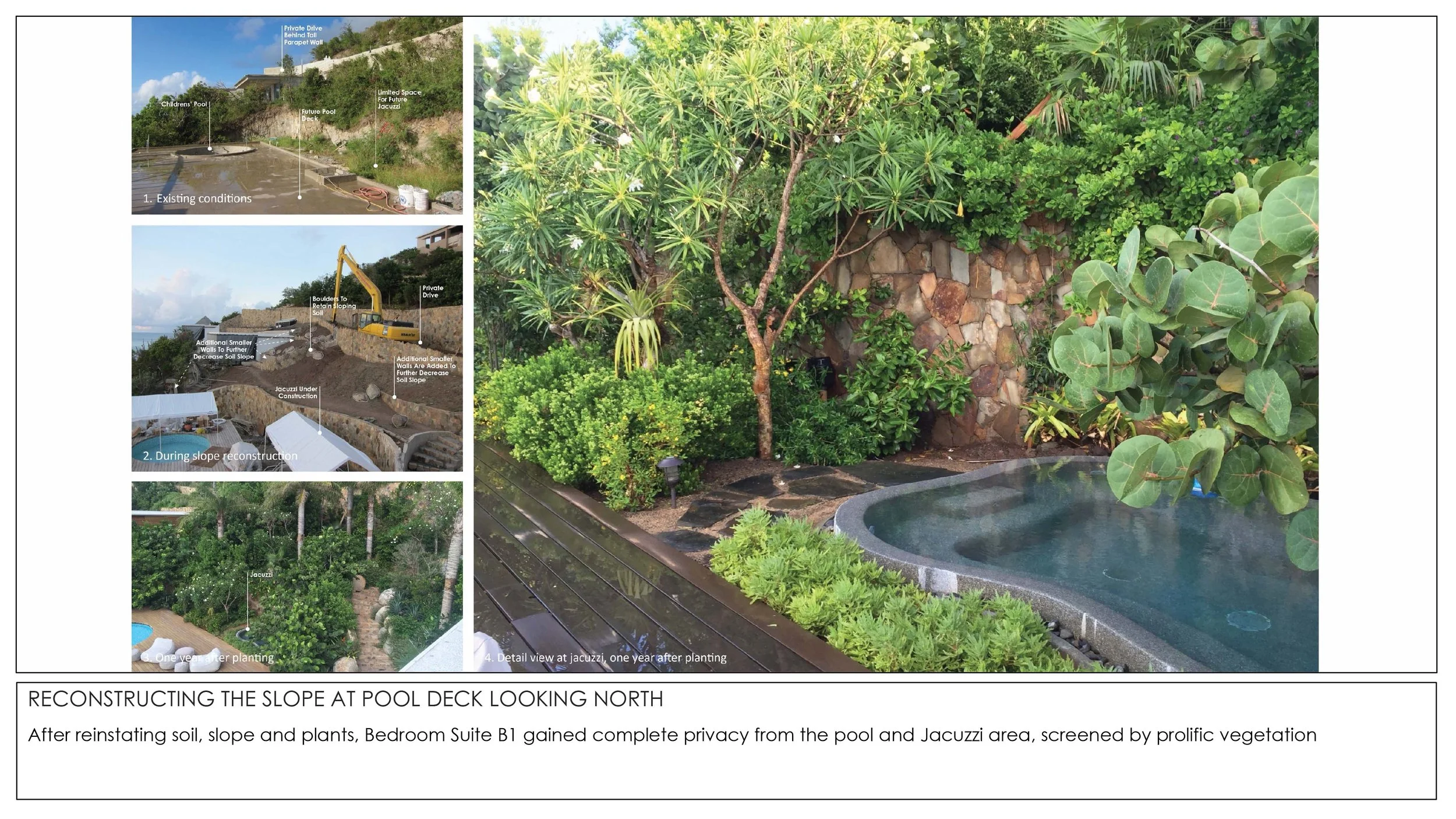
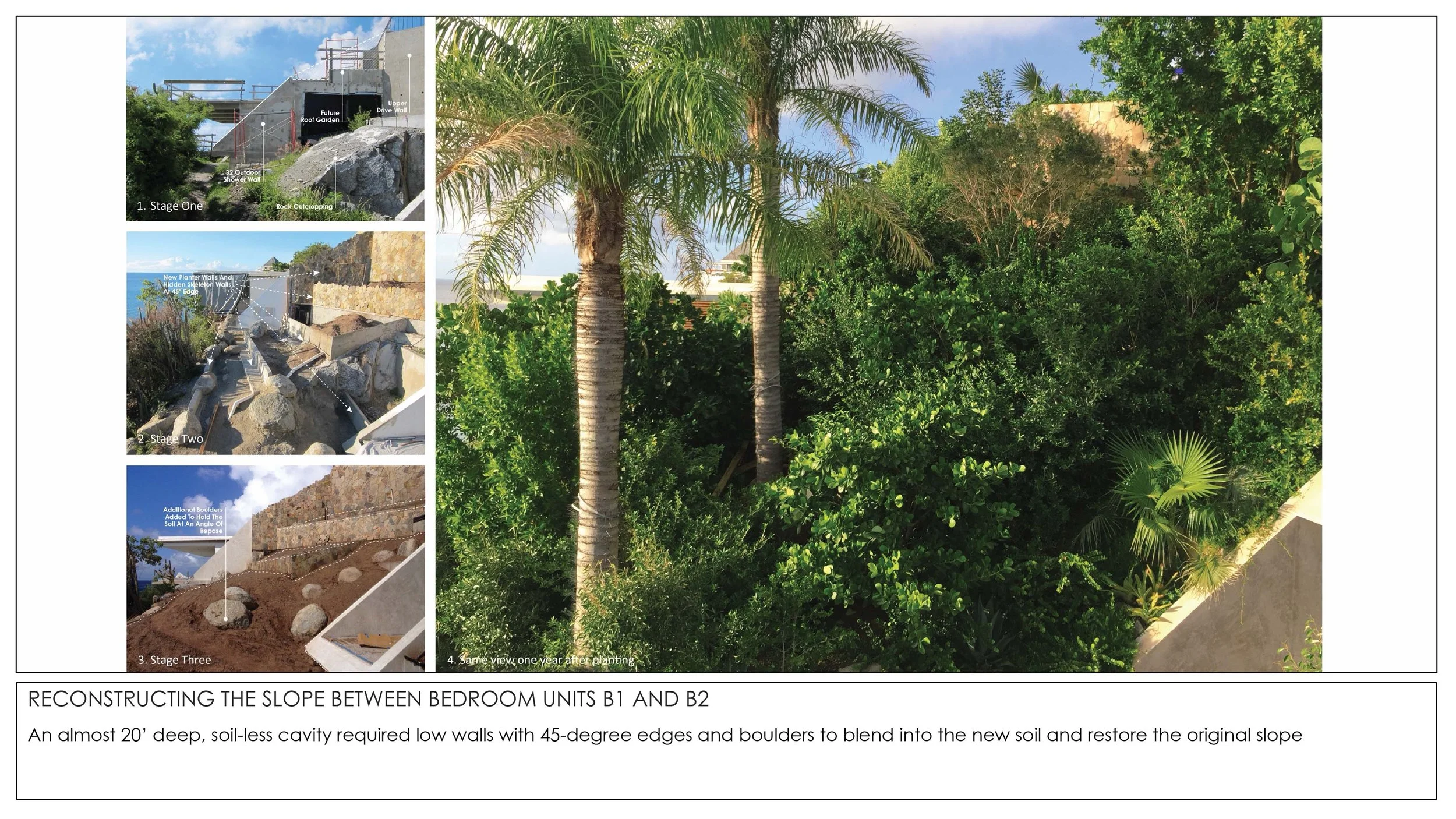
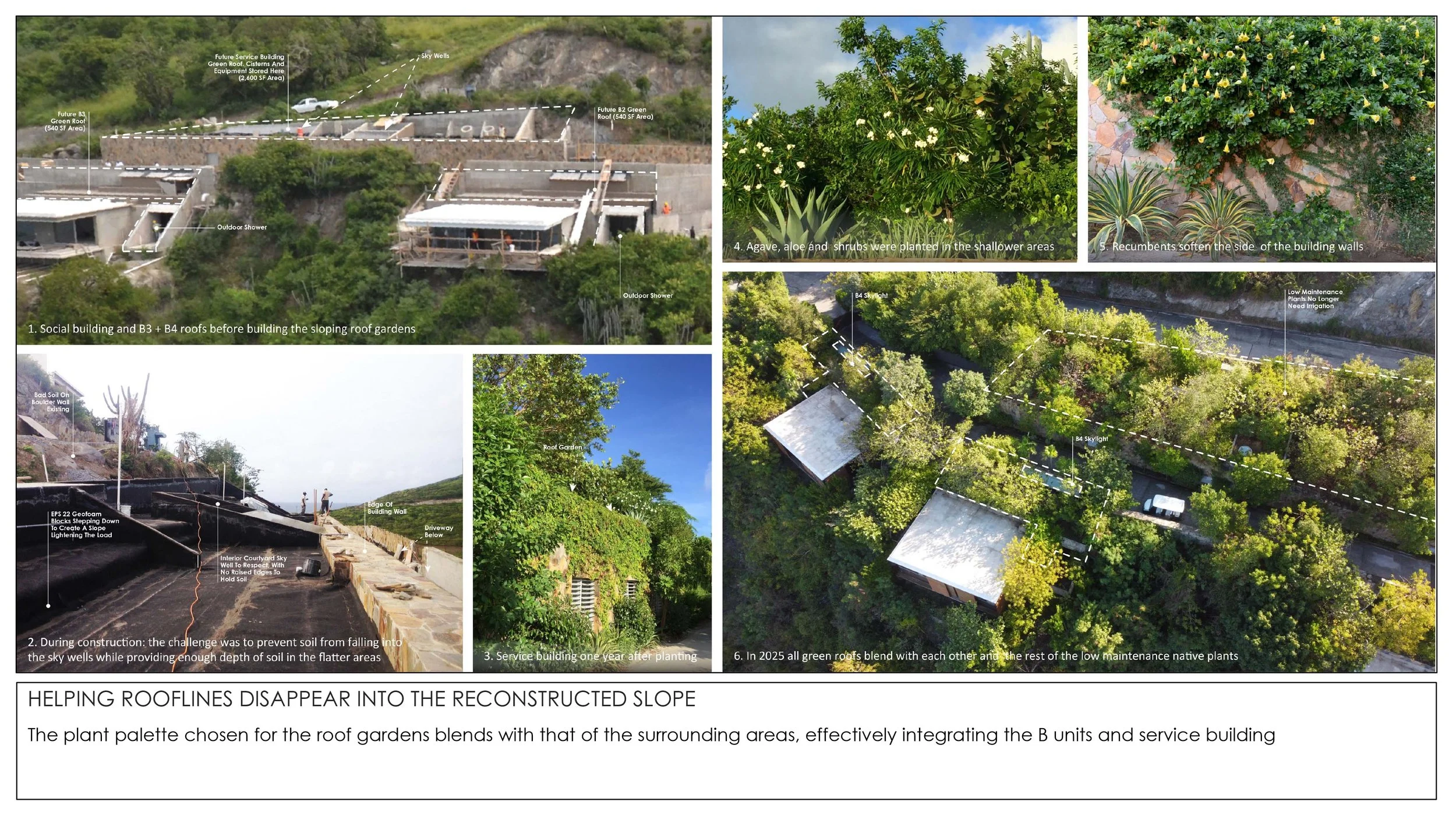
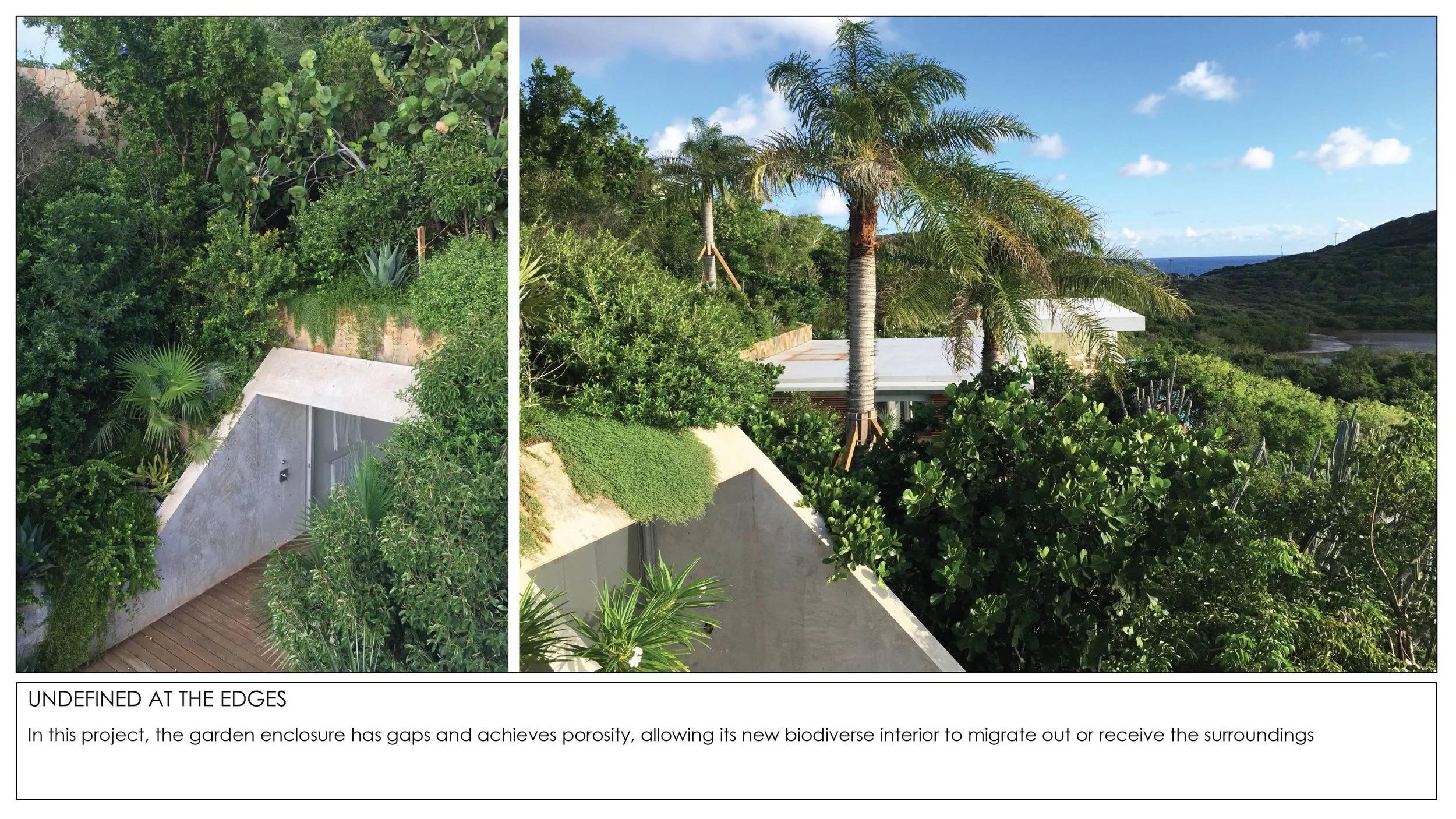
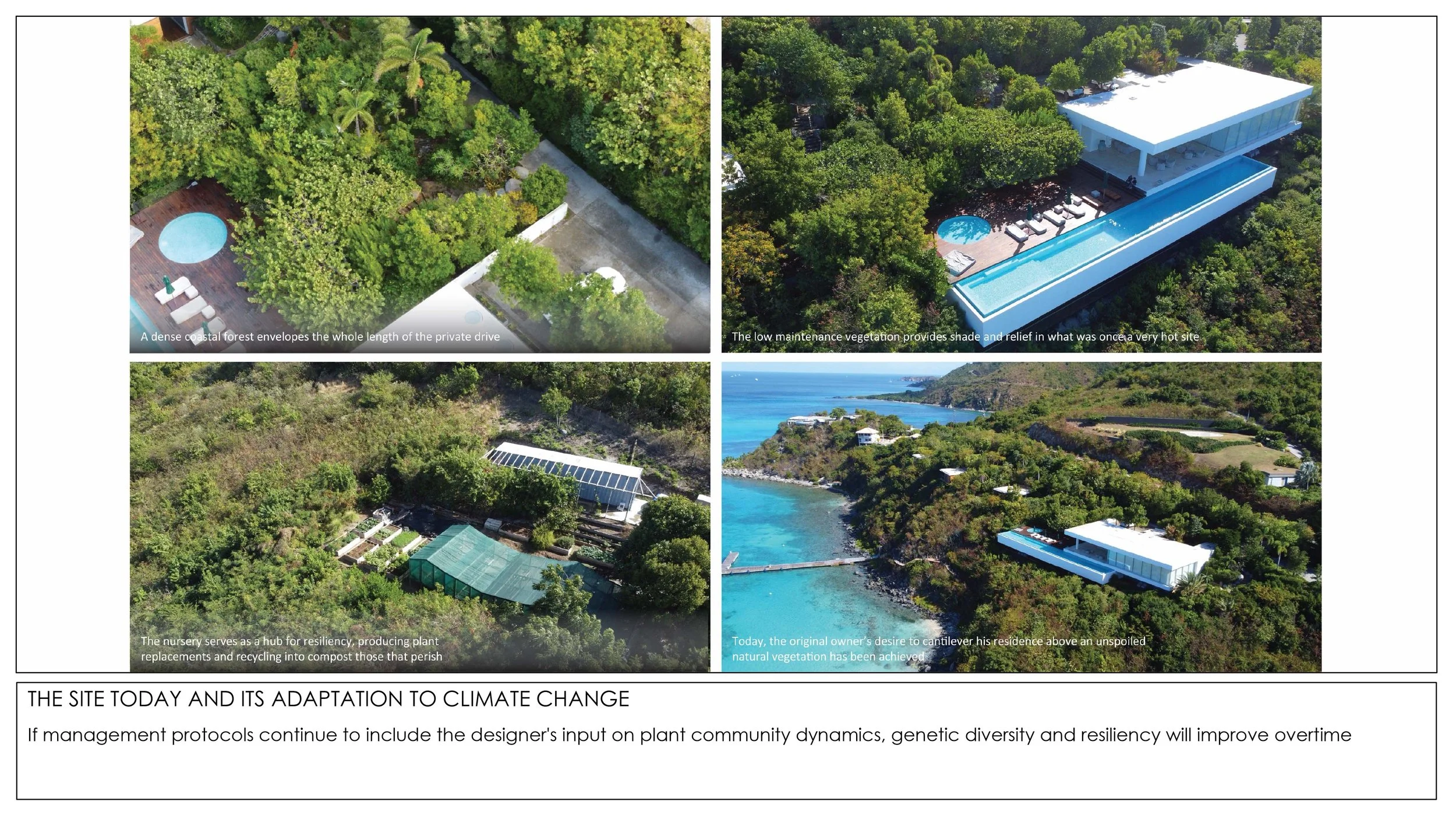
The site is a steep, narrow 10-acre oceanfront parcel on the hotter western side of the island. It was highly disturbed by ongoing construction when the landscape architect joined the team. The owner wanted the house's living and bedroom units to appear as though emerging from natural, unspoiled vegetation. However, excavations, exposed bedrock, topsoil erosion, and invasive species colonizing the cleared areas posed challenges. A 12-to 20-foot elevation change between the private drive and the building units below made access difficult. After 75% completion of the construction drawings, the landscape architect was called to Virgi Gorda to work directly with the project engineer on-site, addressing issues such as rainwater collection, graywater reuse for irrigation, erosion control, slope stabilization, and planting strategies. After construction, the designer continued to monitor plant performance for two years, guiding landscape maintenance and restoring the beach dune after Hurricane Irma (Category Five) struck in 2017.
The degraded vegetation on the site had lost its regenerative capacity to return by itself to the semi-deciduous dry coastal forest, shrub thicket or cactus scrub that once occupied this area—which are plant communities highly adapted to drought, salt exposure, heavy winds and hurricanes. Remnant patches suggested that it was possible to reintroduce a variety of native and endemic species and combat invasives plants through mechanical removal of Guinea grass, Wild tamarind and Neem tree, among others.
The "non-garden" approach arose from the designer's deep understanding of local plant communities’ interaction with soil microbiomes and climate, embracing the ecological clarity that emerges when these systems evolve naturally. The design acknowledged that plant communities are dynamic and can change over time. The decision to plant at higher density stemmed from the understanding that plants cover the ground both horizontally and vertically, competing for light, water, and nutrients from day one. In a tropical coastal site, this meant clustering different species side by side and layering them vertically from the outset. Fertilizer and water were minimized to encourage natural adaptation and resiliency.
Imported horticultural cultivars in the islands are often selected for popularity, focusing on larger flowers or longer blooming seasons, but lack ecological services such as pollen, nectar, or fruits. In contrast, the smaller, fleeting flowers and fruit of native species, which are abundant but neglected, offer a sense of time in the Caribbean, where temperatures remain constant year-round.
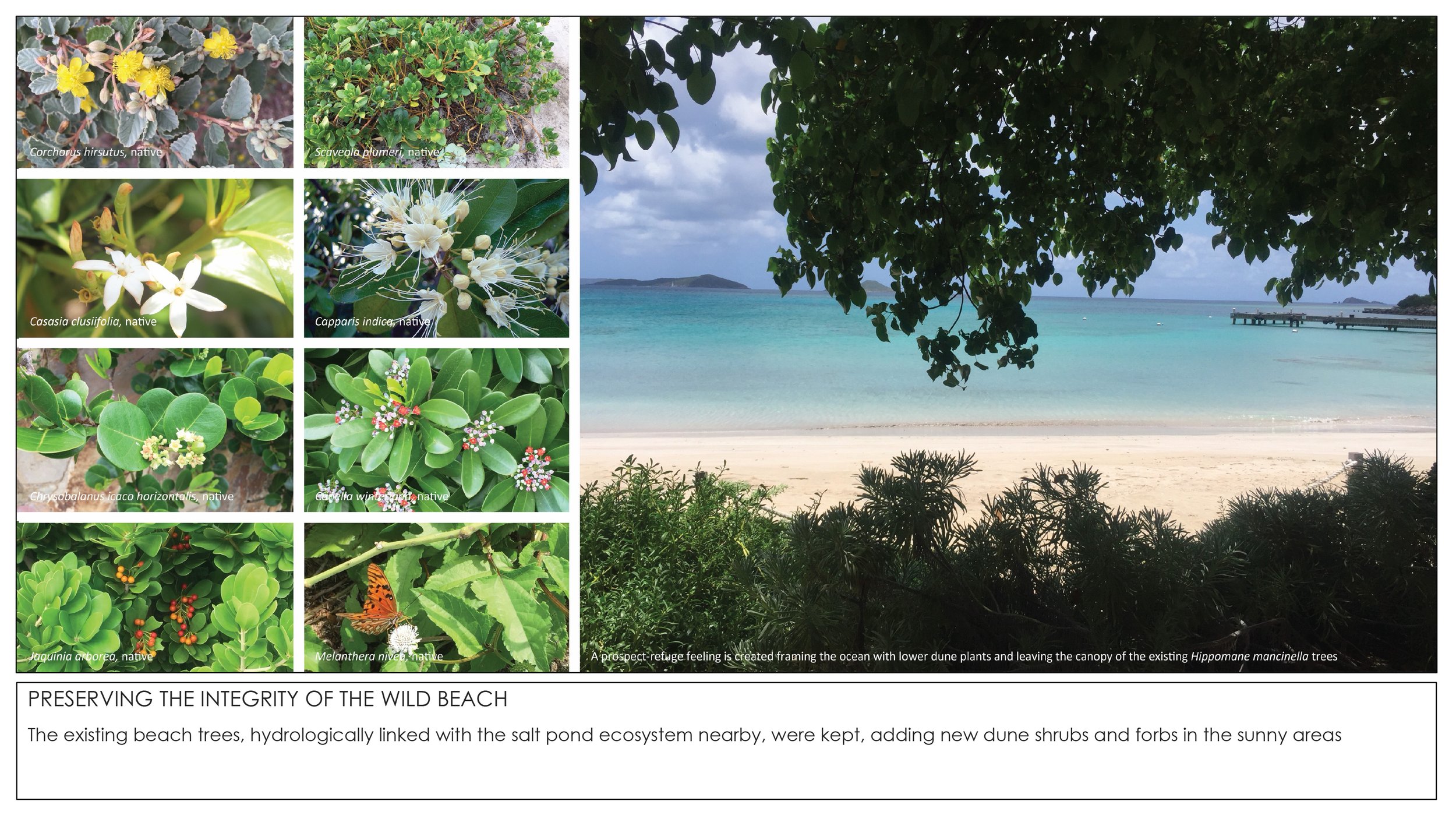
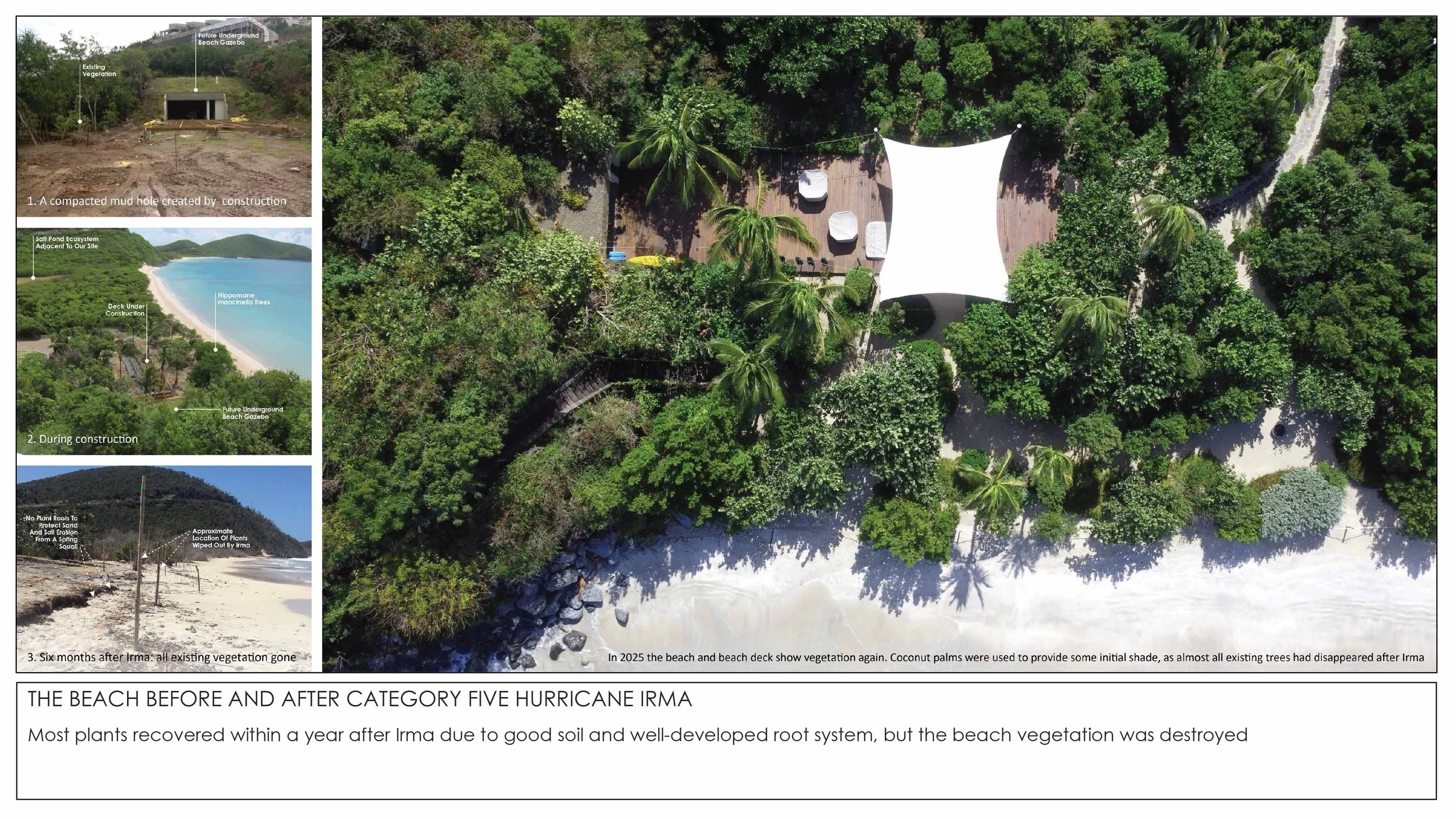
The slope reconstruction methods, soil design, plant choices, density, and delayed planting process all contributed to faster regeneration after Hurricane Irma devastated the island. However, the beach vegetation, installed just the year before, was wiped out and had to be restored using a complex injection of organic matter beneath the sand to replicate the lost dune conditions.
What set this project apart was the relationship established with the landscape being created. Even in the face of destruction and loss, with plants damaged or lost, the design’s memory remained embedded in the site, supporting the plants' return and regeneration in a new form. The emotional connection formed through this process, watching the plants return and flourish, brought an undefinable joy, reminding us of the joy of living, loving, and longing.